





For both wheelchair riders and those who help push, comfort and health are closely tied together. The right seat cushion can stop pressure sores before they start, support better posture, and cut down on end-of-day tiredness. Among the dozen options on the market, air cushions and high-density foam cushions stand out as two of the most heavily requested choices. Yet how can you tell which of the pair will suit your body, routine, and spending plan?
This article walks through the main strengths and weaknesses of air and foam wheelchair cushions so you can choose with confidence.
Why Wheelchair Cushions Matter
People who sit for hours in a chair or on a seat frame face a clear and present risk: sitting pressure builds up at key contact spots. Gradually, relentless force on the hips, tailbone, and thighs can form pressure sores-blisters that sting, interrupt daily life, and heal slowly.
A well-made cushion does far more than simply feel softer.
-
It spreads weight across a larger area, lowering the chance of skin breakdown.
-
It props the spine and pelvis into a neutral line, guarding against back and joint strain.
-
It keeps the seat steady and torso aligned, vital for anyone with unsteady muscles.
-
It eases fatigue by letting blood circulate freely instead of pooling in compressed limbs.
In short, picking the right cushion is about more than everyday ease, it shapes your long-term skin health and daily energy levels.
Foam Wheelchair Cushions
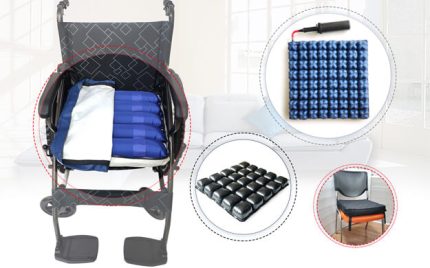
Foam pads have become a go-to seating aid for many people who use wheelchairs. Manufacturers offer several foam grades, from everyday polyurethane to higher-density options and the popular memory foam, each giving its own feel and support.
Benefits of Foam Cushions
-
Affordable: Because they cost less than most specialty seats, many households can buy them without special funding.
-
Simple to use: Slip the pad on the chair, and it stays in place-no pumps, valves, or tools.
-
Supportive structure: High-density grades hold the body steadily for hours of sitting.
-
Light maintenance: With no moving parts, these pads tend to last and do not call for routine servicing.
Limitations
-
Limited pressure relief: Soft foam compresses under weight, yet it cannot adjust instantly to every small shift in posture.
-
Heat and moisture buildup: Closed-cell foams trap sweat and heat, which may irritate skin over time.
-
Compression over time: Daily use gradually compresses soft foam, robbing the seat of firmness and support.
Best for:
-
Short-term wheelchair users
-
Individuals with low risk of pressure sores
-
Budget-conscious buyers
-
Those who prefer low-maintenance solutions

Air Wheelchair Cushions
Air cushions rely on a network of flexible cells or inflatable chambers that cradle the body. Many models let users add or remove air so every seat feels precisely tuned to a persons weight and posture. Top systems employ multiple cells that stay firm under the trunk yet soften around the legs, thus balancing mobility and extra support.
Benefits of Air Cushions
-
Superior pressure relief: By spreading force over a wider surface and moving as the person shifts, air cushions greatly reduce the chance of pressure sores for long sitters.
-
Customizable firmness: Users can pump in or let out air until the feel suits them.
-
Breathable design: Open channels let heat escape, helping skin stay cooler and drier.
-
Dynamic support: The cushion shifts with the body, providing ongoing relief as posture changes.
Limitations
-
Higher cost: Air models usually require a larger up-front investment.
-
Regular maintenance: Caregivers must check pressure; small leaks may need patching.
-
Durability depends on care: Staying attentive to inflation extends the products life.
Best for:
-
People who spend most hours in a wheelchair
-
Anyone rated moderate or high for pressure-sore risk
-
Users who want support that molds to shifting posture
-
Caregivers or assistants available for quick on-site checks
Side-by-Side Comparison
| Feature | Foam Cushion | Air Cushion |
|---|---|---|
| Pressure Relief | Moderate | Excellent |
| Comfort | Good | Very Good |
| Maintenance | Low | Medium to High |
| Durability | Medium | High (if well-maintained) |
| Cost | Lower | Higher |
| Weight | Usually Heavier | Lightweight |
| Best For | Short-term, low risk | Long-term, high risk |
How to Choose the Right Cushion
Selecting the best wheelchair cushion for pressure sores and comfort involves more than checking the label.
1. Assess your physical needs
-
Do you have existing pressure sores or fragile skin?
-
Are you likely to sit for long hours without repositioning?
-
Do you sweat easily, or live in a hot climate?
If yes, an air cushion for wheelchair users might offer better skin protection.
2. Consider your budget and upkeep
-
Solid foam seats cost little and need almost no routine care.
-
An air model costs more but may save money by cutting long-term medical bills.
3. Consult with professionals
Occupational and physical therapists can examine posture, weight spread, and skin status, then prescribe the cushion that best fits each user.
4. Think about accessories
-
Choose cushions with removable, washable covers
-
Consider using a non-slip base to improve stability
FAQs
Q1: Do foam cushions cause pressure sores?
Foam seats by themselves dont create sores, but an old pad that no longer molds or a design that traps weight puts the user at risk.
Q2: How often should I replace my wheelchair cushion?
Foam models usually need fresh foam every six to eighteen months, while well-cared-for air cushions can serve for several years.
Q3: Are air cushions noisy or uncomfortable?
Most air cushions are silent, and soreness stems from over-inflation or under-inflation; adjusting the pressure fixes the problem.
Q4: Can I travel with an air cushion?
Definitely. An air cushion is light and compact, but be mindful of cabin pressure, and carry a small pump for emergencies.
Conclusion
Choosing between air and foam is not a contest; its a search for the seat that supports your health, daily routine, and personal comfort.
-
Foam cushions offer reliable support at an affordable price, best suited for short-term users and those at low skin risk.
-
Air cushions provide superior pressure relief and adaptability, ideal for long-term use and high-risk individuals.
The ideal cushion is simply the one that secures your comfort, safety, and independence. Always consult a qualified health professional before making a choice that matches your body and your daily routine.