





Introduction
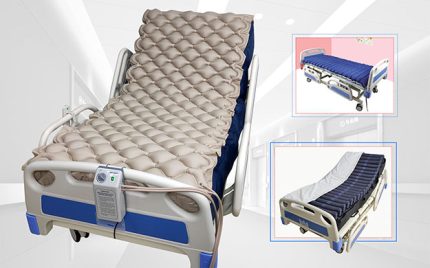
Hospital air mattresses—whether alternating pressure, low-air-loss, or hybrid foam-air mattresses—are essential for protecting the skin, enhancing comfort, and decreasing the need for manual turning. Choosing the right hospital air mattress supplier requires considering more than just the price. It can impact patient outcomes, regulatory compliance, uptime, and total cost of ownership (TCO).
This guide is designed to provide practical information to U.S. buyers on how to identify the best hospital air mattress suppliers in the United States—what questions to ask, what evidence to check, and how to analyze and benchmark proposals for comparison.
Core Criteria for Selecting U.S. Suppliers
1) Regulatory & Quality
-
FDA status:
Confirmation of establishment registration, device listing, and 510(k) clearance (if applicable) for powered pressure-reducing surfaces. The firm and device can be verified in the FDA database, and the Overview of device regulation can be reviewed.
-
Quality system:
Current ISO 13485 certificate (scope includes design/manufacture of medical mattresses or pumps) is available.
-
Labeling & UDI:
Check UDI, FDA-compliant labeling, and labeling/IFU for traceability (claims and safe use) as outlined in FDA guidance.
-
Post-market:
Handle expectations related to complaints, MDR reporting and compression, field safety notice, and post-market surveillance summary (scoped trend analysis for CAPA).
Tip: Trustworthy suppliers for hospital air mattresses regularly share their FDA registration numbers, applicable 510(k) numbers, and quality certificate packages.
2) Product Safety & Performance
-
Flammability:
Ask for the test results of 16 CFR 1632 and 1633 concerning the as-configured mattress assembly.
-
Electrical safety & EMC:
For powered pumps, ask for IEC/UL 60601-1 and 60601-1-2 certificates by an NRTL like UL, Intertek, and TÜV.
-
Biocompatibility:
For patient contact surfaces, ask for an ISO 10993 summary, with material-level mapping, to demonstrate and explain the biocompatibility (typically cytotoxicity, sensitization, irritation).
-
Performance data: Pressure-mapping evidence, immersion/envelopment details, microclimate (airflow) for low-air-loss, duty-cycle durability, and alarm (low pressure, power failing, and disallow power for [to]) condition settings of the mattress.
Authoritative contexts for FDA pathways and premarket expectations: U.S. Food and Drug Administration
3) Infection Control
-
Cleaning validation: Compatibility with common hospital disinfectants like quats, bleach, and alcohol.
-
Design for cleanability: Removable/wipeable covers, seamless welded and zippered covers, and decontamination instructions aligned with your protocols.
-
Resources: Ensure the vendor’s instructions align with the practical EVS workflows and CDC environmental cleaning guidance.
4) Service & Reliability
-
Warranty & SLAs: Outline the duration, the coverage components, and the average turnaround.
-
Spares & coverage: Parts list with pricing, with US technician footprint, interval for advance replacement, and MFBR (if provided).
-
Training: On-site or virtual training, quick cards, e-learning modules, and competency sign-offs.
5) Operational Fit
-
Onboarding: Quick setup, mode of transport, color-coded hoses and pumps, and lockout.
-
Usability: Alarms and bedside IFUs are easily readable, quick CPR release, and edge support for transfers.
-
Interoperability: Fits to existing frames and rails, and there are bariatric options available.
6) Commercial & TCO
-
Pricing transparency: Capital and rental, itemized accessories, and consumables.
-
Lifecycle costs: Expected lifespan, filters, covers, servicing of batteries and pumps, and supplies for cleaning.
-
Supply chain: Lead times, buffer stock, volume discounts, framework contracts, and surge capacity.
An example would be a pressure relief mattress for hospitals that is slightly more expensive upfront. Over a 3 to 5 year period it reduces skin breakdowns, nurse time spent on turns, and unplanned downtime to the hospital.

Quantifiable Specs Buyers Should Request
A description of these specs must be requested to be documented by each hospital air mattress supplier (in the IFU/data sheet):
-
Pump flow rate (LPM): e.g., 6–12 LPM (or supplier’s validated value).
-
Noise level (dB at bedside): target ≤30–40 dB; request test setup details (distance, room type).
-
Alternation cycle time (min): e.g., 8–12 minutes; note adjustability.
-
Max weight rating: e.g., ≥200–300 kg / 440–660 lb across all modes.
-
Cover abrasion resistance: e.g., ≥50,000 Martindale (if available).
-
Ingress protection (pump): e.g., IPX rating (if applicable).
These are reference anchors; align final thresholds to supplier test data and your clinical needs.
Due Diligence: How to Verify a “Best” Supplier
Regulatory & safety file
-
Check FDA registration & listing and (if applicable) 510(k) in FDA databases; request the 510(k) letter or link.
-
Request a Declaration of Conformity (where used), ISO 13485 certificate, and third-party reports: UL/ETL NRTL certificates for IEC/UL 60601-1/-1-2, 16 CFR 1632/1633, and ISO 10993 summaries.
-
Ask for ISO 14971 risk management summary, IFU, cleaning/disinfection validation, pressure-mapping and durability data, and UDI/traceability details. FDA backgrounders and overviews: U.S. Food and Drug Administration+1
Run a pilot
-
Trial on a representative ward for 2–4 weeks.
-
Track: alarm false-positive rate, nurse setup time, night-time noise, patient comfort scores, sacral/heel skin condition, and environmental cleaning effort.
-
Collect feedback from wound care, nursing, and biomed.
Service evaluation
-
Evaluate response time (during business hours and after hours).
-
Compare the spare-parts price list with a possible list of response times. Confirm advance replacement or loaner equipment availability.
-
Ask for reference sites and review how the vendor handled adverse events/field actions.
The best hospital air mattress suppliers USA will supply evidence proactively, align trials to your protocols, and treat post-market support as part of the value—not an add-on.
Red Flags (Common Warning Signs)
- Consumer-grade air beds only, with no clinical testing or hospital cleaning validation.
- No FDA registration or 510(k) where the product category requires it.
- Missing or outdated third-party reports on electrical safety, EMC, or flammability—or certificates that do not match the current model or firmware version.
- Incomplete IFU (Instructions for Use), lacking CPR release instructions, weight limits, or disinfectant compatibility details.
- Unclear after-sales and spare-parts support, with no defined service network, SLAs, or replacement process.

Comparison Table — Supplier Evidence Map
| Supplier Evaluation Area | What to Ask For | Acceptable Evidence | Why It Matters |
|---|---|---|---|
| FDA & 510(k) | Registration & 510(k) number (if applicable) | FDA listing snapshot; 510(k) letter/link | Legal market access; risk control. |
| Safety & EMC | IEC/UL 60601-1 & 60601-1-2 | NRTL test reports (UL/Intertek/TÜV) | Patient/device safety; ward EMC. |
| Flammability | 16 CFR 1632/1633 | Full mattress-assembly reports | Fire safety for hospital use. |
| Biocompatibility | ISO 10993 summary | Lab reports/material mapping | Skin integrity during prolonged contact. |
| Performance | Pressure mapping; duty cycles | Data sheets; validation reports | Clinical effectiveness; durability. |
| Infection Control | Cleaning validation & compatibility | Disinfectant matrix; IFU extracts | Reduce HAI risk; protect materials. |
| Service | SLA; spare-parts plan | Contract terms; spares price list | Uptime & predictable costs. |
| TCO | Lifecycle cost breakdown | Quote + consumables + service | Budget predictability; value. |
FAQs
Are CE-marked mattresses acceptable in the U.S.?
Not by themselves. CE ≠ FDA. Every device in the U.S. has to meet the U.S. requirements (i.e. registration/listing and 510(k), if applicable).
Verify in FDA databases and request documentation.
Do all alternating pressure systems require a 510(k)?
It depends on classification and features of the device. Most powered pressure-reducing systems are class II and are 510(k) eligible. This should, however, be validated by the manufacturer and FDA resources.
What noise level is reasonable for sleep quality on wards?
As a practical target, ≤30–40 dB at the bedside is commonly used, but this should also be validated with trials on your ward and user feedback.
How do we compare similar quotes?
The quotes should be compared on more than just the unit price. Total cost of ownership (consumables, covers, filters), service level agreements, evidence completeness (flammability/electrical/biocomp, pressure mapping), delivery timelines, and training should all be considered. The table above should be used as the scoring rubric.
Conclusion
The leading suppliers of hospital air mattresses in the USA have airtight regulatory documentation, proven clinical efficacy, strong infection- control compatibility, and reliable service economics. Challenge them to provide proof, conduct a realistic pilot, and assess TCO—not just the upfront cost. That’s the way to choose an FDA compliant medical mattress solution that saves the US market on alternating pressure mattress systems and protects patients, staff time, and budgets.
Senyang provides FDA-registered hospital air mattresses compliant with US healthcare standards and issues our Supplier Evaluation Checklist (RFP questions + evidence list) to encourage universal response formats for faster, more accurate vendor comparisons.
Helpful References
-
FDA — Overview of Device Regulation (roles, pathways). U.S. Food and Drug Administration
-
FDA — Registration & Listing (how to confirm establishments/devices). U.S. Food and Drug Administration
-
FDA — Premarket Notification 510(k) (purpose and expectations). U.S. Food and Drug Administration
-
CDC — Environmental Infection Control (cleaning/disinfection context).