
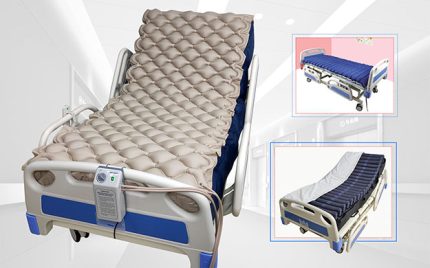









A variety of healthcare facilities are in need of hospital cots that are designed to enhance the care of patients whose requirements differ. One of the commonly asked questions is: can any mattress be used on a hospital bed? Together with understanding that there is a relation between the bed and the mattress used, where the bed is placed and how the patient occupies that space is crucial for patient care, safety, and comfort. To achieve this, we will answer the question of why ordinary mattresses are inadequate for hospital beds investigating ways of how to resolve it.
Section 1: Design and Functionality of Hospital Beds
Generally speaking, Permanent and collapsible bed for individually sick patients designed by hospital workers for patient comfort and their better medical care. These are integral parts of the patient-centered approach, which includes many types of patient repositioning. These features include:
- Head and foot elevation: Raising or lowering the head or foot of the bed to ensure proper blood circulation, patient comfort, or easier breathing.
- Height adjustments: Hospital beds can be raised or lowered to assist caregivers in provision of care, or to Height adjustments help patients get on and out of the bed more easily.
- Tilt functions: There are selected specific positions, providing for some tilt to be used on particular beds, these positions can incluse the trendelenburg and the reverse trendenelburg in critical care beds.
Given these functions, hospital beds are specifically designed to accommodate mattresses that can bend, flex, and adjust alongside these movements. Standard home mattresses are typically rigid, meaning they lack the flexibility needed for proper use on hospital beds. Therefore, they might not only fail to support these adjustments but also pose a safety risk.
Section 2: Why Standard Mattresses May Not Be Suitable
Household mattresses emphasize comfort, while hospital mattresses are intended for the more specialized area, bed classification. It is these characteristics that permanently disqualify ordinary mattresses:
- Size and Fit: The design of hospital beds often suggests that their parts including walls, rails, and mattresses fall within certain non-standard size regulations – that is, length in particular, and width to an extent. It is possible that this dosage may either be an over or under usage whereby the mattress gets out of place or lacks space. This may pose serious risk to the patient.
- Flexibility: The need for movement of the hospital bed mattresses Department of Veterans Affairs guarantees that the mattresses used with the nursing beds must adapt with the mechanical bed movements. Common mattresses including those embedded with inner springs or those with deep layers of memory foam are very rigid and, therefore, unable to mould to such movements drastically lowering the functionality of the bed.
- Pressure Relief: Creating a bed sore or a pressure ulcer is yet another prominent factor that motivated new polyurethane mattresses investigation among the most bedridden patients. The construction of standard mattresses fails to provide such distribution in relation to stress direction for the support surfaces in particular the points of risk hence increasing the chances of acquiring such painful sores.

Section 3: Types of Mattresses Designed for Hospital Beds
The mattresses produced for the hospital beds are rather unique, not only in terms of the dimensions and the flexibility but also in terms of the function. Here are the main types:
- Pressure Relief Mattresses: These types of mattress also called as anti-pressure or antisore are designed so that the body weight is supported equally over the whole area so that an excessive pressure to any single point is avoided. They are often made from high-density foam or feature special air pockets that inflate and deflate.
- Alternating Pressure Mattresses (APMs): Air is pumped into different areas of the mattress at different times and then each area is allowed to be slenderized so as to distribute the patient’s weight over the different pillows present. Such types of mattreses also help circulation of the blood and prevent ulcers which makes it useful for patients who have to remain on bed for long periods of time.
- Low Air Loss Mattresses: These are designed with small holes all over the surface which help in the gradual release of air from the cells thereby cooling and drying the patient. This is mainly beneficial for the patients who tend to sweat a lot or who have skin conditions due to moisture.
- Bariatric Mattresses: Exclusively manufactured for people with larger bodies, bariatric mattresses are usually extra firm and thick and cater for the effective management of larger people who probably requires bigger or tougher beddings than the normal ones.
Section 4: Benefits of Using the Right Mattress for Hospital Beds
Choosing the right mattress for a hospital bed is crucial to ensuring both patient comfort and health. The benefits of using a proper hospital mattress include:
- Enhanced Patient Comfort and Care: Properly fitted mattresses help relieve pain and promote better rest. A hospital bed with the right mattress can be adjusted to fit the patient’s needs, improving their overall well-being.
- Safety and Mobility: Hospital mattresses are designed to work with the bed’s mechanical functions, ensuring patients can safely adjust positions without the mattress slipping or causing discomfort. This is particularly important when caring for patients who are immobile or have limited movement.
- Longevity and Durability: Hospital mattresses are made from durable, medical-grade materials that can withstand frequent cleaning and disinfecting. Unlike standard mattresses, which may wear out quickly in a hospital environment, hospital mattresses are built for long-term use and are more hygienic.

Section 5: Considerations for Home Care Use
In home care settings, particularly when caring for patients with long-term illnesses or mobility issues, hospital beds are often introduced to help caregivers manage the patient’s needs. Using the right mattress in these situations is essential for providing effective care at home.
- Using Hospital Beds at Home: Hospital beds used in home care settings require the same level of attention in terms of mattress selection. A regular mattress might seem like a more economical choice, but it will fail to deliver the necessary pressure relief, flexibility, and support needed for long-term care.
- Budget vs. Functionality: While hospital-specific mattresses may seem more expensive than standard mattresses, their long-term benefits for patient health, comfort, and safety far outweigh the costs. Moreover, hospital mattresses are often covered by insurance or healthcare programs, especially if they are deemed medically necessary.
In conclusion, it is not advisable to use any mattress on a hospital bed. Hospital beds are designed to work with specialized mattresses that meet the specific needs of patients, ensuring both safety and comfort. By investing in the right mattress, you can enhance the quality of care and prevent complications such as pressure sores, ensuring the patient’s well-being in both clinical and home care settings.