





It is commonly accepted that the longer we live, the more difficulties our bodies have in facing stress, pain, and health hazards, particularly with long lasting sitting. Especially in the case of elderly wheelchair-users, selecting an optimum cushion adds considerably to the user’s comfort, alleviates the risk of pressure ulcers, and increases life satisfaction. This guide is intended to summarize the basic principles and structures for choosing the most acceptable wheelchair cushions for elderly users.
Common Challenges Faced by Elderly Wheelchair Users
Elderly individuals have few options available for activity and when forced, due to incapacitating illness or injury to use a wheelchair for a long time they are faced with some uniquely difficult hurdles. These hurdles comprises of.
- Pressure Sores: Due to immobility in a particular position for a long duration of time. Some areas of the body experience pressure which when prolonged susceptibility develops fast and leads to pressure sores which are quite painful and might complicate into various infections.
- Discomfort: A large number of older people suffer from what is referred to as the ‘discomfort syndrome’ as a result of sitting in one position too long due to age related muscle mass loss and joint column flexibility.
- Circulatory Problems: A reduced circulation happens, particularly to the less active group of the people. It results in swelling, numbness, and a high likelihood of pressure sensitive ulcers forming.
- Posture Issues: Deterioration in muscle and bone strength can lead to postural deviation, compounding awkwardness and causing chronic physical complications such as scoliosis.
Understanding these common challenges highlights the importance of selecting a cushion that addresses comfort, support, and health concerns.

Key Features to Consider When Choosing a Wheelchair Cushion for the Elderly
To choose an appropriate wheelchair cushion for an older adult, it is important to take into consideration the following factors:
- Pressure Relief: The wheelchair cushion should be designed in a way that it can balance and spread the sensory weight evenly around the person in a wheelchair in such a way that there is no excessive weight on protruding parts such as the tail bone and the thighs. This helps in preventing pressure sores.
- Comfort: Quality comfort is of utmost importance to the elderly, who are usually in a wheelchair for hours. Therefore, to be useful, a cushion should be comfortable while still providing support, reducing pressure points by fitting the natural shape of the user’s body.
- Support: Good posture is particularly important for the elderly since they could have low muscle strength and or spine problems. A proper cushion supports the user’s body by assuring that the user maintains the correct seated postures throughout.
- Breathability: Air circulation is required as a means of keeping the skin cool and dry. A cushion that is well ventilated avoids the condition of too much heat and moisture which causes a skin rash and sore.
- Durability and Maintenance: Considering the fact that one is most likely to be frequently using the cushion, the stuffing has to be made with quality fabric that can deal with everyday use. The cushion needs to have a comfortable covering that i easy to maintain to help in maintaining proper hygiene for future use.
- Lightweight and Portable: A cushion that is easy to carry or move allows caregivers to handle it more easily, which is particularly important for elderly users who may need assistance when transferring in and out of the wheelchair.

Types of Wheelchair Cushions for Elderly Users
There are several types of wheelchair cushions available, each designed to address different needs. Below are the most common types:
-
Foam Cushions:
- Description: Foam cushions are one of the most basic and affordable types. They are lightweight and provide decent comfort for short-term use.
- Benefits: They offer a moderate level of support and pressure relief, making them suitable for individuals who use wheelchairs for shorter periods.
- Drawbacks: Foam cushions may lose their shape over time and are less effective in relieving pressure compared to more advanced options.
-
Gel Cushions:
- Description: Gel cushions are filled with a gel material that helps distribute pressure evenly across the surface. These cushions are known for their cooling effect and ability to conform to the user’s body shape.
- Benefits: Ideal for elderly individuals with sensitive skin or those prone to pressure sores. The gel filling helps reduce pressure buildup while providing a comfortable sitting experience.
- Drawbacks: Gel cushions can be heavier and may require more maintenance to prevent gel leakage or damage.
-
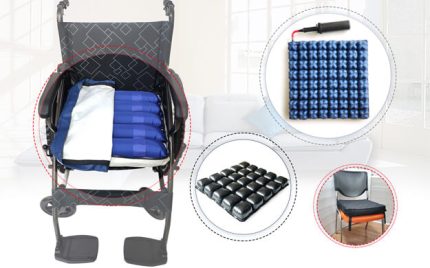
Air Cushions:
- Description: Air cushions consist of interconnected air cells that can be inflated or adjusted to provide customizable support. The ability to change air pressure makes them highly adaptable to the user’s needs.
- Benefits: Air cushions provide superior pressure relief and are particularly beneficial for individuals at high risk of developing pressure sores. They also allow for fine-tuned adjustments to accommodate individual comfort levels.
- Drawbacks: Air cushions can be more expensive and require regular maintenance to ensure they remain properly inflated.
-
Hybrid Cushions:
- Description: Hybrid cushions combine elements of foam, gel, and air technologies to provide the best of all worlds. These cushions often have a foam base with gel or air inserts for additional comfort and support.
- Benefits: Hybrid cushions offer excellent pressure relief, comfort, and support, making them a versatile option for elderly users with diverse needs.
- Drawbacks: The cost of hybrid cushions tends to be higher due to the combination of materials and features.
Conclusion
Choosing the best wheelchair cushion for the elderly requires careful consideration of comfort, pressure relief, and overall support. By understanding the types of cushions available and the specific needs of elderly users, it becomes easier to make an informed choice that can improve both comfort and quality of life. Whether opting for foam, gel, air, or hybrid cushions, ensuring proper posture and pressure distribution will help minimize