









Pressure care for someone who is bedbound all day requires two decisions: selecting an appropriate support surface and managing daily care. The length of time someone spends in bed, how they are able to move, their body weight, shape, and current skin state all impact which mattress is chosen. Daily care management includes choosing the correct mattress and implementing a plan that includes mattress repositioning, use of smooth bedding, moisture control, checking skin, and providing nutrition and equipment.
1. Start with Four Factors That Change Mattress Needs
There are many factors to consider beyond someone being bedridden when selecting a mattress that meets their support surface needs. The assessment must capture the required surface features as well as the extent of the person’s monitoring needs.
Time Spent in Bed
Longer and more continuous bed use means the accelerating need for pressure redistribution, temperature, and moisture management is controlled by a durable, high quality cover that can withstand daily inspection. Determine if the use is overnight, extended daytime rest, or almost continuous bed care.
Ability to Move and Reposition
Someone who is able to move and reposition themselves has a different requirement for their support surface when compared to someone who is unable to move and relies on others to move them. Record the range of movement of the trunk and limbs, the person’s sensations, level of comfort, and each required position change and assistance.
Body Weight and Shape
Mattress load, inflation, immersion, and the sensation of bed base through the mattress surface might all be affected by weight and body shape. Width, height, prominent bony areas, edema, contractures, and uneven weight distribution can alter support even if the total weight falls within the acceptable limits.
Current Skin Condition
If skin is exposed to prolonged pressure and is intact, then the area will need to be monitored frequently. There are a number of things that should prompt a review by the responsible health care professional and updating the care plan, such as: an area that has discolored, become hot or cold, swollen, or blistered; broken skin; or pain, especially over a bony area.
2. Match Mattress Type to Mobility and Care Complexity
Below is a general guide to match varying levels of support surfaces to the different levels of long-term care and bed needs. Final choice should align with the individual’s assessment and bed compatibility along with existing local clinical practices.
| Care Profile | Possible Surface Direction | Why It May Fit | Daily Checks |
|---|---|---|---|
| Long bed rest with some independent movement | High-specification foam surface | Stable support with pressure redistribution and simple setup | Foam recovery, cover condition, bedding layers, and skin response |
| Very limited movement or inability to reposition | Alternating pressure mattress | Changes supporting cell groups over time and supports a structured care routine | Pressure setting, cycle operation, tubing, alarms, and bottoming-out check |
| Changing mobility or mixed support needs | Hybrid or convertible surface | Combines stable support with dynamic options depending on design | Operating mode, setup, foam condition, air function, and staff understanding |
| Higher body weight or broader body shape | Bariatric-rated pressure care surface | Provides appropriate width, load capacity, cell volume, and edge support | Bed compatibility, inflation, clearance, transfers, and cover tension |
| Existing skin damage or rapidly changing risk | Specialist surface selected through clinical review | Matches support level to current skin findings and care requirements | Frequent skin review, position tolerance, settings, comfort, and documentation |
| Frequent moisture or incontinence care | Pressure-redistributing surface with suitable cover | Supports cleaning while limiting fluid entry into the core | Cover seams, zipper protection, contamination, drying, and linen changes |
3. When a High-Specification Foam Mattress May Fit
A high-specification foam mattress provides a stable, quiet, low-maintenance and low-movement surface for long-term bed use. The thickness, the density and the different layers of foam, the level of firmness and the degree of foam contouring, the level of edge support, and the type of cover all play a role in how well the mattress provides support for the body.
Make sure the foam returns to its original shape, check that the person does not sink to the base of the bed, and make sure that the edges of the mattress do not obstruct the transfer of the person. A rigid, waterproof, form-fitting covering can reduce the mattress’ ability to conform, so the entire mattress should be assessed to determine its suitability, and not just the foam.
The surface provided by foam also has a use by date. The support provided by a foam mattress may no longer be adequate due to a change in the person’s mobility, their weight, their skin condition, their pain levels, or the amount of time they spend in bed.
4. When an Alternating Pressure Mattress May Fit
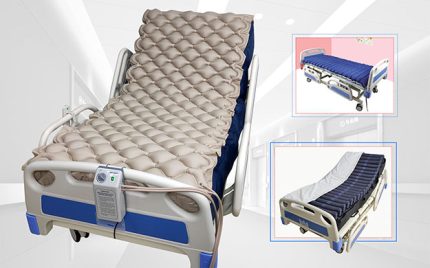
Movement is extremely limited, the care giver needs to assist with repositioning or the pressure care plan calls for a dynamic support surface with a high degree of interchange alternation to warrant the use of an alternating pressure mattress. The mattress consists of a pump and cells which inflate and deflate repetitively.
A complete alternating pressure mattress system should be evaluated as a matched pump-and-mattress combination. Air output, cell arrangement, pressure range, cycle time, user weight range, mattress height, static function, alarms, and the underlying bed frame all affect performance.
Dynamic operation does not eliminate the requirement of daily assistance. Staff still needs to implement the repositioning plan, assess skin, address moisture, flatten bedding, and attend to the pump alarm or the resident’s change in comfort. The system should be operational and set based on the approved instructions.
Daily Dynamic Mattress Checks
- Confirm that the pump is powered, operating, and set for the current user and mattress.
- Check that air hoses are connected, unkinked, and not trapped by the bed frame.
- Observe at least part of the alternating cycle and confirm that the expected cell groups change.
- Check the surface for bottoming out according to the mattress instructions.
- Confirm that static mode has not been left active after a care task.
- Respond to low-pressure, power, or service indicators using the approved procedure.
5. Weight Capacity Is More Than a Maximum Number
A stated maximum load is the first and only check. The bed, its width, length, depth and width, side and edge constructions, and height must be in cohesion with the person being cared for. Narrow beds restrict repositioning, even within the load limit.
For a larger body shape, assess whether shoulders, hips, limbs, and feet remain supported without compressing side rails or tubing. Ensure caregivers and transfer equipment are not obstructed in repositioning the client and their care.
Sample testing should consist of the mattress, pump, bed frame, cover, sheets, and standard positioning aids. Evaluate support at various settings and as the head of the bed is adjusted, as well as while the user is turned and while the user performs personal care.

6. Build an Individual Repositioning Plan
Repositioning is the movement of the person to alleviate pressure, allowing the clinician to perform a routine inspection of the person’s skin, bedding, and comfort level. The repositioning schedule should reflect the individual’s risk, tolerance, type of support surface, current skin findings, pain, and sleep pattern along with the clinician’s recommendations.
When you decide to leave the person in a position for a longer period, record the reason and state that you are unable to tolerate that position. Record the agreed upon position, preferred and needed assist, the equipment used, areas to be protected, and the reason to review the positioning plan sooner.
Repositioning Workflow
- Explain the movement and confirm comfort before starting.
- Prepare pillows, wedges, slide sheets, and personal care supplies.
- Manage tubes, catheters, dressings, and clothing before movement.
- Use the approved handling method and coordinated caregiver roles.
- Avoid dragging the skin across the sheet when lifting or sliding support is available.
- Check alignment, heels, elbows, sacral area, shoulders, and the back of the head after positioning.
- Record the position, time, skin observation, comfort, and any change to the plan.
7. Keep Bedding Smooth, Dry, and Minimal
Bedding lies between the client and a pressure-distributing surface. Wrinkles, tight bedding, pads, thick layers, multiple folds, crumbs, seams of clothing, and other objects can generate pressure or disrupt the mattress’s ability to conform.
When using the care plan, only include the necessary layers. Fit sheets evenly without pulling so tight that the mattress surface is constricted and cannot move or submerge properly. Post repositioning, run your hand over the occupied area to check for any folds, tubes, fasteners, pads, or fabric that may be wet.
Using a medical air mattress with a removable stretch cover can help simplify cleaning routine with a properly fitted cover. Top surface, seams, zipper, underside, and signs that fluid has reached the internal cells or foam should be checked.
8. Combine Skin Checks with Routine Care
Shop, dress, and turn aids provide many opportunities for assessing skin. These routine activities help assess skin and provide care even if skin assessment is the main goal. Skin in the sacral, hip, shoulder, ankle, heel, back of the head, ears and areas under medical devices should be assessed for skin that is firm or soft, wet, broken, and/or painful.
Assessments on darker skin tones should look for changes that are purple or blue with a shiny, warmed, swollen, hardened, or textured appearance rather than being red.
Quality and changes of the appearance of skin should be noted as well as if the changes occurred after repositioning. Any of the assessments should be documented even if no changes were noted.
9. Manage Moisture Without Blocking Mattress Performance
Contamination and prolonged exposure of the support surface and skin to moisture are caused by incontinence, sweating, fluid, and wound drainages. An individualized skin-care and continence routine should be employed. Wet materials should be promptly removed and replaced. The skin and the cover of the mattress should be assessed.
Protective pads should be smooth with appropriate breathable areas and be as minimal as possible to prevent bulk. Excessive layers of absorbent fabric can cause bulk and change the shape of the pad. Determine which cleaning agents, disinfectants, and methods of drying the cover are permitted.
Damaged covers should be changed per the equipment’s process. Taped repairs, open seams, cracked coatings, and unprotected zippers allow moisture to penetrate the pad and make reliable cleaning difficult.
10. Use a Short Daily Pressure Care Checklist
| Check | Morning or Shift Start | During Care | End of Shift |
|---|---|---|---|
| Support surface | Power, setting, inflation, cover, and bedding | Comfort, alarms, position, and surface response | Faults reported and backup arranged |
| Skin | Review known risk areas and previous findings | Inspect exposed areas during turning and hygiene care | Record changes and escalate concerns |
| Repositioning | Confirm schedule, positions, and required assistance | Complete and record planned changes | Review missed, delayed, or poorly tolerated positions |
| Moisture | Check continence supplies and cover dryness | Change wet items and clean skin promptly | Confirm dry bedding and clean equipment |
| Nutrition and hydration | Review current plan and support needed | Record intake concerns and provide assistance | Communicate reduced intake or relevant changes |
| Equipment | Check pump, tubing, bed, rails, and accessories | Keep tubing and aids correctly positioned | Charge, clean, store, and report damage |
11. Reassess When the Person or Equipment Changes
Pressure care needs change quickly. Reassess when there is reduced mobility, acute illness, surgery, weight change, appetite decline, new incontinence, pain, sedation, a fall, a new medical device, skin deterioration, or repeated difficulty following the repositioning plan.
Equipment changes also require review. If the equipment is replaced with a new pump, new cover, new bed frame, or additional overlay and the sheeting is changed, or if the equipment is repaired, the support surface may become unsuitable and therefore require reassessment. Confirm compatibility and repeat the daily setup checks after any change.
Conclusion
The long-term management of pressure care for bedridden patients includes a mattress combined with daily repositioning and management. Pressure care management depends on the time the patient spends in bed and inactive, weight and shape, body movements, and the condition of the skin. The mattress may be specialized to include pressure redistributing materials or be a high density foam mattress. It may house breast or knee massages and be bariatric.
The mattress must have a daily routine that includes skin assessment, hydration and nutrition, equipment assessment, bedding, and documentation along with other management of the patient. The routine must be adaptable to the patient’s changing needs; caregiver burden must not increase with the complexity of the routine.
FAQ
The Best Mattress Type for a Long-Term Bedridden Patient
There is no single mattress for every person. Selection depends on mobility, time in bed, body weight and shape, skin findings, comfort, bed compatibility, and the level of caregiver support.
Whether an Air Mattress Removes the Need for Repositioning
Pressure redistribution occurs on air mattresses. Repositioning changes the area of the load distribution, and it also facilitates skin and comfort checks. The individualized repositioning plan should hold unless the clinical team responsible for the patient decides to revise it.
How Often Skin Should Be Checked
Skin checks should follow the care and risk plan of the individual. The best way to maintain consistency is to include skin checks as part of repositioning, cleaning, changing clothes, toileting, and linen changes.
Why Wrinkled Sheets Matter on a Pressure Mattress
Wrinkles and thick layers can create localized pressure and reduce how well the surface conforms. Bedding should remain smooth, dry, and limited to the required layers.
When a Mattress Choice Should Be Reviewed
Review the surface when mobility, weight, skin condition, pain, moisture, health status, bed setup, or equipment performance changes, or when the current routine becomes difficult to complete.