





The different tasks of transferring patients such as moving them to and from a bed to a chair, assistance with hygiene tasks, or repositioning them put different access and hygiene requirements on equipment. Because of this, there must be a range of equipment for each of these tasks. This range should include transfer chairs, transfer pads, and the appropriate slings. This range should also be designed with the resident assessment and caregiver tasks in mind.
1. Begin with the Resident and the Transfer Task
There is no one transfer task device that is suitable for a resident or for all transfer tasks. For each transfer task, the ability of the resident to bearing weight, their trunk control, their sitting balance, their pain level, their skin condition, and their mobility should be assessed.
The control of the task of bed to chair transfer may be very different from access to a bathroom or repositioning in bed or moving through a narrow corridor. The path, the type of surface, the width of the door frame used, the height of the bed, the clearance of the chair, storage, and the location of charging units will all influence the selection.
Information to Record in the Handling Plan
- The exact starting and destination surfaces.
- The resident’s weight-bearing, sitting, and communication abilities.
- The selected device, sling or pad type, size, and attachment method.
- The number of caregivers required for the approved procedure.
- Any positioning, hygiene, pain, skin, or behavioral considerations.
- The alternative method to use if the primary device is unavailable.
2. Compare Transfer Chairs, Slings, and Transfer Pads by Task
What matters when selecting equipment is the movement that needs to be accomplished. The matrix below illustrates some options for nursing home equipment combinations.
| Equipment | Primary Task | Resident Factors | Workflow Checks |
|---|---|---|---|
| Cadeira de transferência | Bed-to-chair, toileting, and short indoor movement | Can remain appropriately supported in sitting | Seat opening, lift range, brakes, clearance, and route |
| Full-body sling | Mechanical lift for highly dependent transfers | Limited or no weight bearing; needs broad body support | Correct size, attachment compatibility, head support, and care plan |
| Toileting sling | Lift-assisted toilet access | Sufficient support and control for the selected sling | Access opening, support level, clothing management, and time in sling |
| Mesh bathing sling | Lift-assisted wet-area transfer | Needs lift support during bathing movement | Drainage, drying, labeling, compatible lift, and inspection |
| Transfer pad or slide sheet | Repositioning and lateral movement across surfaces | Task can be completed without suspending the resident | Grip points, surface friction, caregiver positions, and storage |
| Handling belt | Guided standing or pivot for weight-bearing residents | Can bear weight and participate | Fit, handholds, staff technique, and no use as a lifting sling |
3. Configure Bed-to-Chair Transfers Around Ability and Space
Transfers from bed to chair usually do not follow a single procedure. Some residents are able to stand and pivot with support, some can sit but cannot stand safely, and some require a full mechanical lift. Your plan should reflect these distinctions.
For Residents Who Can Participate
A handling belt, standing aid, or a supported pivot may work for a resident who can bear weight and follow directions. Think about the height of the bed and the placement of the resident’s feet, knee stability, and the position of the wheelchair brakes and armrests. The handling belt aids in guiding the resident, it does not aid in lifting.
For Seated Transfers with Limited Standing Ability
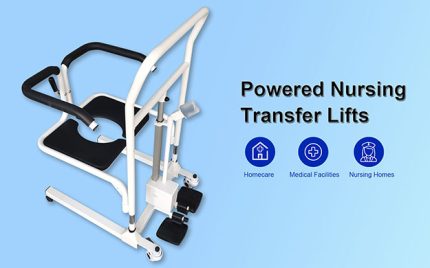
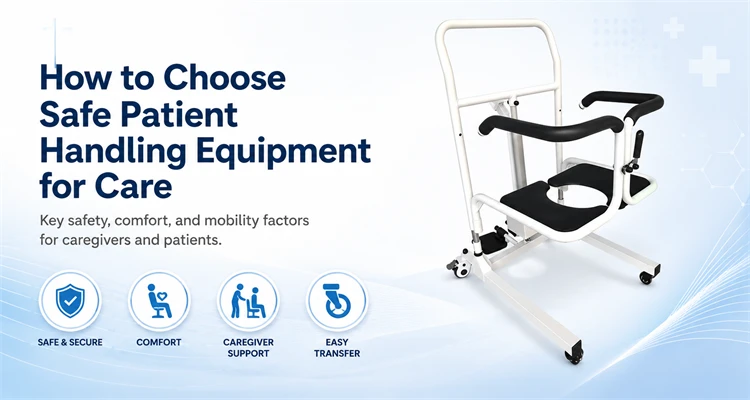
A patient transfer chair for nursing care can support transfers between a bed, wheelchair, toilet, or shower area when the resident can be positioned safely in the seat. Match the lifting range to bed and chair heights, and confirm that the base, casters, and arm structure can approach the intended furniture.
The workflow should define when the two seat sections are brought together, when the safety lock is engaged and who sets the position of the chair and checks the brakes before lifting or lowering. Seat width, rated load, foot support, and resident posture are all important.
For Highly Dependent Transfers
A mechanical lift with a full-body sling is typically used when the resident is unable to bear weight or maintain the posture required to push and lift during the transfer. The sling type, size, loop configuration, head support, capacity, and means of attachment should be addressed in the lifting plan as opposed to being determined at the bedside.
4. Toileting Requires Access Without Losing Support
During a toileting transfer, it is important to have access for clothing/personal care, while maintaining appropriate support for the resident. Transferring to a commode with a transfer chair may make the route from bed to toilet more efficient, however this is only possible if the resident can be safely supported in the seated position of the transfer chair.
Toileting slings allow greater access than most full-body sling designs, but there is less support due to the open design. Therefore, choice of resident is more important. Check trunk control, provide required level of support, check fit and compatibility, check timing of the sequence of care, check caregiver positions, and check the time the resident will be supported by the sling.
Toileting Workflow Checks
- The device fits around the toilet or commode without unstable positioning.
- Brakes and safety locks can be reached before raising or lowering.
- The seat opening or sling design provides the access required for care.
- Caregivers can manage clothing without twisting, overreaching, or losing support.
- Privacy screens and supplies are ready before the transfer begins.
- The equipment can be cleaned and returned to storage immediately afterward.
5. Bathing Equipment Must Work in Wet Conditions
Bathing involves water, wet, slippery floors, temperature changes and increased motion. The transfer chair should consist of wet-cleanable materials, secure casters, good brakes, and foot rests with no water accumulation.
In the case of a lift, a bathing sling that is approved for the lift and task and that is available in the proper size and clearly labeled would help with washing and drying. A bathing sling should be clean, but a dry sling should always be on hand.
Areas with threshold changes can be difficult to manage. The placement of a shower, a drain, a hose, and grab rails will also impact movement. Bedroom equipment may not be as manageable as equipment in the bathroom.
6. Use Transfer Pads for Repositioning and Lateral Movement
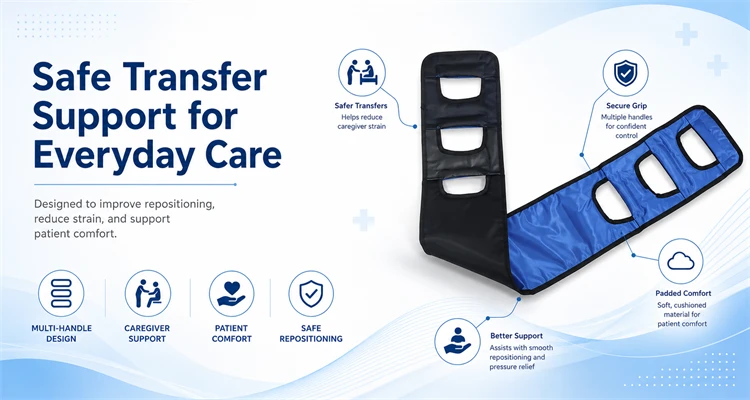
Transfer pads and slide sheets enable repositioning of a resident on a surface without suspension. Examples may be moving a resident to a more elevated position in bed, transferring to a side-lying position, or moving from bed to stretcher.
Transfer pads with reinforced handles should be selected based on the movement, the size of the resident, the gap between the surfaces, the number of caregivers, the grip position, and how the pad will be cleaned. Reinforced handles help with positioning, but caregivers still must have enough space to use a balanced posture and assist the movement.
Not all fabric aids are interchangeable. Check to see if the fabric aid is made to stay under the resident. Note if the fabric aid is single-patient or reusable. Also, consider the method by which the fabric aid is removed and the fabric aid’s laundering impact on seams and handles.
7. Build a Product Combination Around Daily Workflow
Nursing homes need a variety of products to accommodate an assortment of resident profiles. However, excessive options can result in an overwhelming inventory. A good starting combo includes products for assisted standing, transfers with seat support, high level of assistance, care of wet areas, and bed repositioning.
Core Equipment Combination
- Transfer chairs in the load and seat-width ranges used by the facility.
- Mechanical lifts matched to room layout and resident dependency levels.
- Full-body, toileting, and mesh bathing slings in assessed sizes.
- Transfer pads or slide sheets for repositioning and lateral movement.
- Handling belts for residents who can bear weight and participate.
- A small reserve of cleaned slings and pads to cover laundering and inspection cycles.
Product variety alone is insufficient. The inventory must be placed close enough to the care delivery point that staff do not unnecessarily delay a transfer or resort to a less safe option. The floor-level workflow must accommodate charging, cleaning, inspection, and repairs.
8. Standardize the Caregiver Workflow
Even with safe equipment, caregivers still struggle with the navigation of instructions that are specific to shifts. Consequently, each approved transfer should have a task-based procedure that describes the resident, the equipment and its attachments, caregiver number, steps and actions, communication signal, the movement sequence, and the post movement check.
- Review the current handling plan before starting.
- Explain the movement to the resident and confirm participation.
- Clear the route and prepare the destination surface.
- Inspect the device, brakes, battery, sling, pad, seams, and labels.
- Position caregivers before raising, sliding, or moving the resident.
- Communicate one agreed cue for coordinated movement.
- Check posture, comfort, clothing, and skin contact after transfer.
- Clean, charge, inspect, and return the equipment to its assigned location.
9. Inspect, Clean, and Keep Equipment Available
A product combination only works when all components are deployed. Create pre-use checks for locks, brakes, wheels, controls, batteries, frames, fasteners, webbing, seams, labels, and handles. According to agency policy, remove the equipment from service if it is damaged or unidentifiable.
Cleaning instructions must be appropriate to the care environment. Ensure approved detergents, washing temperatures, drying methods, disinfection, and replacement cycles.
Maintain stock sufficient for occupied rooms, peak transfer times, cleaning cycles, battery charging, and repair. Engage caregivers in sample testing because they will identify the reach, storage, turning, attachment, cleaning, and specification issues.
10. Common Product-Combination Mistakes
- Buying one sling style for every resident and task.
- Choosing a transfer chair without testing bed, toilet, shower, and doorway clearance.
- Using a toileting sling when the resident needs more trunk or leg support.
- Treating a handling belt as lifting equipment.
- Storing transfer devices too far from the rooms where they are needed.
- Failing to provide clean backup slings and pads during laundering.
- Training staff by product name without teaching the complete transfer workflow.
Conclusão
Safe patient handling equipment should be configured around real nursing home tasks. Transfer chairs can support selected seated transfers and short indoor movement, slings connect highly dependent residents to compatible lifting systems, and transfer pads assist repositioning and lateral movement.
A strong product combination links each device to a resident assessment, care plan, caregiver sequence, cleaning process, and backup method. Before bulk purchasing, test the equipment in actual bedrooms, toilets, shower areas, and corridors with the staff who will use it.
FAQ
The Difference Between a Transfer Chair and a Patient Lift
A transfer chair is used to support a resident in a seated position to perform certain transfers and short transports around the facility. A patient lift is used to support a resident in a lifting sling to perform longer transports and is used for lifting support over a longer distance.
The Sling Types a Nursing Home Commonly Needs
A practical range may include full-body slings, toileting slings, and mesh bathing slings in assessed sizes. The exact mix depends on resident needs, lift compatibility, and laundering capacity.
The Role of Transfer Pads in Patient Handling
Transfer pads and slide sheets assist in repositioning a resident and facilitating short transfers over a surface. Transfer pads are designed based on the size of the resident, the task to be performed, the positioning of the caregiver, the design grip, and sheet cleaning.
How Often Handling Equipment Should Be Checked
Caregivers should complete the defined pre-use check every time. Formal inspection, maintenance, and replacement intervals should follow applicable requirements, facility procedures, and manufacturer instructions.
Why Staff Should Test Equipment Before Purchase
Front-line testing reveals whether equipment fits rooms, routes, beds, toilets, storage areas, cleaning processes, and normal caregiver reach. It also shows how much training the workflow requires.