





Comfort, aesthetic appeal, and durability are some of the significant aspects when choosing a fabric for the seat cushions. Whether it is home use furniture or commercial ones, such as wheelchairs and office chairs, one should know the advantages and disadvantages of each fabric to help make a sound decision. The article thus deals with typology, characteristics, and selection of particular fabrics and materials for predetermined needs and situations.
Common Types of Seat Cushion Fabrics
1. Cotton
- Advantages: Soft, breathable, and easy to find everywhere. Suitable for use indoors so that it can be used for the furnishing of the house.
- Disadvantages: Tends to get stained, get bleach, or wear out with time. Very low water resistance.
- Best For: Home furniture and indoor seating.
2. Polyester
- Advantages: Has a great strength and is easily affordable. Expands or crinkles colon often joined with other materials to enhance its softness.
- Disadvantages: Compared to natural fabrics, its breathability is impressive and may lead to hotspots.
- Best For: Chairs in the office and seating in the outdoors.
3. Leather
- Advantages: Pleasant to the touch and easy to maintain. High wear resistance and provides a sophisticated appearance.
- Disadvantages: High cost, lower ventilation, and high expenditure in maintaining from drying up.
- Best For: High chairs in executive offices as well as in car seats.
4. PU (Polyurethane)
- Advantages: A cheap alternative to leather that looks like it. Attractive, thicker than normal, and coated with an abrasive waterproof covering.
- Disadvantages: Not as strong as real leather; can become dry from intensive workload and crack.
- Best For: Wheelchairs, office chairs, and home furniture.
5. PVC (Polyvinyl Chloride)
- Advantages: Hard wearing, tough and waterproof making a material that is resistant to marked for stains. Suited for the websites with heavy trade.
- Disadvantages: More difficult to get air and may be less comfortable if worn for an extended period.
- Best For: Commercial and medical settings, automotive seats.
6. Linen
- Advantages: Natural, breathable, and aesthetically pleasing. Linen offers a casual, elegant look.
- Disadvantages: Wrinkles easily and requires more care to maintain.
- Best For: Home furniture.

Factors to Consider for Different Use Cases
The ideal fabric varies depending on the setting:
- Home Furniture: Prioritize comfort and aesthetics. Cotton and linen are popular choices.
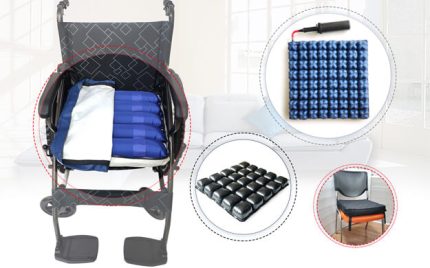
- Wheelchairs: Focus on durability, waterproofing, and ease of cleaning. PU and PVC are excellent options for medical-grade cushions.
- Office Chairs: Look for a balance of comfort and durability. Polyester blends and PU work well.
- Automotive Seats: Durability and resistance to wear are key. Leather or high-quality PU is often preferred.
How to Choose Based on Specific Needs
Key Requirements and Fabric Choices:
| Requirement | Recommended Fabrics | Why |
|---|---|---|
| Comfort | Cotton, PU, Linen | Soft and breathable for prolonged use. |
| Durability | Leather, PVC | Resistant to wear and suitable for heavy-duty applications. |
| Waterproofing | PU, PVC | Ideal for medical or outdoor use; resists spills and stains. |
| Antibacterial | PU, PVC | Easy to clean and prevents bacterial growth, crucial for medical use. |
| Easy Maintenance | Leather, PU | Wipes clean easily; retains appearance with minimal effort. |
Why PU and PVC Excel
- PU: Designed as an economical fabric that is also nice to touch and looks good. Most appropriate for office and wheelchair cushions.
- PVC: Very tough, and waterproof, this material can suit the highest commercial or clinical requirements.
Comparative Table of Fabrics
| Fabric | Advantages | Disadvantages | Best For | |
|---|---|---|---|---|
| Cotton | Soft, breathable, affordable | Stains, fades, not water-resistant | Home furniture | |
| Polyester | Durable, wrinkle-resistant | Less breathable, traps heat | Office chairs, outdoor furniture | |
| Leather | Luxurious, durable, easy to clean | Expensive, less breathable | Office, automotive seats | |
| PU | Affordable, waterproof, soft | Less durable, may crack over time | Wheelchairs, office chairs | |
| PVC | Extremely durable, waterproof | Less comfortable | Medical, commercial use | |
| Linen | Natural, breathable, aesthetic | Wrinkles, high maintenance | Home furniture |
Environmental Considerations: Sustainable Fabrics
Recycled polyester and organic cotton are also becoming increasingly popular due to eco-conscious practices. Such fabrics are less harmful to the environment and businesses that are in search of such practices. Both PU and PVC are not the best in terms of being eco-friendly but the manufacturing chain is changing and making it better.

Case Studies: ROHO and Senyang
ROHO Seat Cushion: This brand is popular for making medical-grade cushions ROHO uses high-grade PVC to offer great durability, waterproofing, and support for the medical sector.
Senyang Seat Cushion: Based foremost on the economic cost of PU and PVC fabrics, the leader in commercial seat cushions has expanded to the office and medical environment.
The characteristics of the seat cushion fabric will depend on its intended purpose. PU and PVC are definitely recommended for almost all medical and commercial usages since they are highly durable, water resistant and easy to maintain. However, home users might use cotton or linen for added comfort and extra feel. It is advisable to keep in mind the different requirements of your case while selecting.
Safety and beauty are paramount in every detail. By knowing the advantages of each fabric, you will get an equation, which equals comfort – durability – and beauty, for your seat cushion.