




Introduction
Individuals with prolonged wheelchair use as a seating option develop a higher risk for skin breakdown over areas like the ischial tuberosities and the coccyx. A question that users, relatives and, clinical staff often pose is quite simple: Do air cushions really help prevent pressure ulcers?
In short, a wheelchair air cushion can help significantly reduce risk as long as the cushion redistributes pressure well and is applied correctly. However, pressure ulcer prevention is multifactorial. A pressure relief cushion is the primary aid and not a standalone solution.
What Actually Causes Pressure Sores?
Understanding what a cushion can and cannot do makes it easier to understand what causes pressure sores.
Prolonged Pressure
Constant, localized pressure can stop blood flow and, without oxygen, tissues will breakdown. Cushions help by spreading the load over a larger area and preventing concentrated pressure sores.
Shear and Friction
Friction irritates the skin and weakens the protective outer layer. Deep tissues can be damaged when the skin and outer layer shift. Low-shear surfaces and stable seating reduce these pressures.
Heat and Moisture
A warm, humid microclimate softens the skin, making it more vulnerable. The use of breathable and moisture-wicking covers will help create a healthier interface.
Reduced Mobility and Nutrition
Reduced mobility means less frequent and less natural shifts in pressure. Skin resilience may also be affected by insufficient hydration and protein intake. This is why cushions are most effective when used in conjunction with repositioning schedules and supportive nutritional hydration.
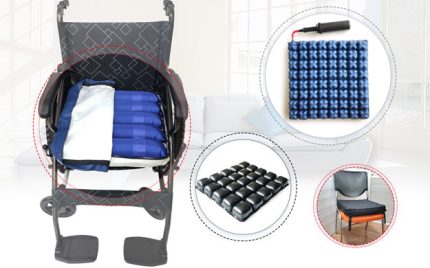
How Air Cushions Work
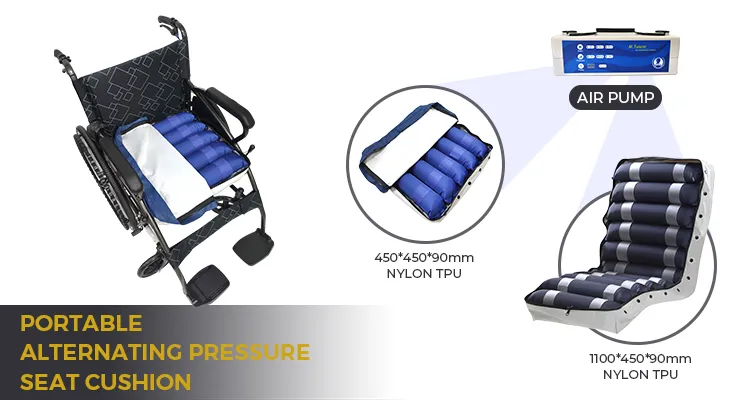
Compared to many single-material surfaces, air cushions provide more dynamic control over the load, movement, and microclimate interaction within surfaces.
Immersion and Envelopment
When the pelvis sinks into and becomes enveloped by the surfaces of the cushions, immersion and envelopment increase the contact area and relieve peak pressure.
Multi-Cell Design
Multi-cell arrays that respond independently are incorporated into the design of many cushions. When one zone is compressed, adjacent cells share the load, which increases pressure redistribution as the user shifts throughout the day.
Adjustable Firmness
Clinicians or users can adjust the air volume as needed to ensure that weight is evenly distributed over the cushion. Proper inflation of the cushion will prevent the user from “bottoming out” and will maintain support under the pelvis.
Realistic Limits
Cushions are not a substitute for all other means of pressure relief. If a cushion is too inflated or under inflated, or if a user is in poor posture, or position changes are not made, the cushion will not be able to maintain all pressure relief.
Air vs. Foam vs. Gel vs. Hybrid
Use this quick comparison to match features to needs.
| Cushion Type | Pressure Relief | Stability | Maintenance | Best For |
|---|---|---|---|---|
| Air Cushion | ★★★★☆ Excellent pressure redistribution | Good (adjustable firmness) | Needs regular air checks | Long-term/high-risk users |
| Foam Cushion | ★★☆☆☆ Basic comfort | High | Low maintenance | Short-term/low-risk users |
| Gel Cushion | ★★★☆☆ Good immersion | Good | Medium (can trap heat) | Moderate-risk users |
| Hybrid (Air+Foam) | ★★★★☆ Balanced support | Very Good | Medium | Users needing stability + pressure relief |
| Roho-style Multi-cell Air Cushion* | ★★★★★ Superior individualized fit | Good | Higher upkeep | High-risk or immobile residents |
* “Roho-style” refers to the multi-cell air category, not a brand comparison.

Selecting the Right Air Cushion
Clinical Fit and Posture Control
Select the cushion which aligns with the user’s risk level and posture control goals. Take into account the user’s pelvic alignment, sensitivities around the coccyx, and history of wounds on the ischium. For users with forward sliding, consider designs that offer greater pelvic stability while reducing friction.
Size and Weight Capacity
Make sure the dimensions of the cushion fit the user’s wheelchair and that the user’s body weight is within the range specified. For users above the average weight, a bariatric cushion can offer more immersion and support on the cushion
Stability and Transfer Safety
Assess each cushion for edge stability which is necessary for safe transfers, a stable base to prevent “hammocking,” and an anti-slip base to ensure the cushion does not shift during use.
Hygiene and Infection Control
Covers that are moisture-wicking and wipeable support hygiene and infection control. Fluid-resistant layers prevent the spread of bodily fluids and assist during incontinence episodes.
Maintenance and Staff Training
When users and caregivers identify the guidelines for inflating the cushion, checking for leaks, and recognizing early signs of skin breakdown (redness, warmth, and discomfort), goals are more likely to be achieved. Incorporate these activities into your daily and weekly plans.
Quick Checklist: Air Cushion Essentials
-
✅ Risk level assessed and cushion type chosen
-
✅ Cushion fits wheelchair width and depth
-
✅ Inflation level allows immersion without bottoming out
-
✅ Cover is breathable, wipeable, and intact
-
✅ Staff or user trained on daily checks and adjustments
-
✅ Cushion inspected weekly for leaks or uneven air cells
-
✅ Position shifts every 15–30 minutes encouraged
How to Use Air Cushions Effectively
Initial Setup
When seated, the pelvis should immerse so soft tissues envelop the cells, but the user should not touch the hard seat base. Check for left-right symmetry and contact points, especially the sacrum.
Daily Routine
Encourage micro-shifts every 15 to 30 minutes when possible: lean, push-up (if appropriate), or caregiver-assisted weight shifts. Even small shifts will help lower peak pressures and are therefore encouraged.
Regular Checks
Air level and comfort should be checked daily; inspect the skin after prolonged sitting. Check weekly for potential slow leaks, and inspect the valve and cover for integrity.
Maintenance
Ensure that labels are readable, surfaces are clean, spare parts are easy to access, and worn covers are replaced promptly. This will preserve the microclimate and allow the cover to work in the appropriate range of hygiene.
Common Mistakes
-
Over-inflation → The cushion is too firm. This negates the purpose of the cushion, focusing pressure rather than dispersing it.
-
Under-inflation → This increases the risk of bottoming out over bony areas.
-
Ignoring posture → Posterior pelvic tilt and sliding are often overlooked. This increases shear and friction.
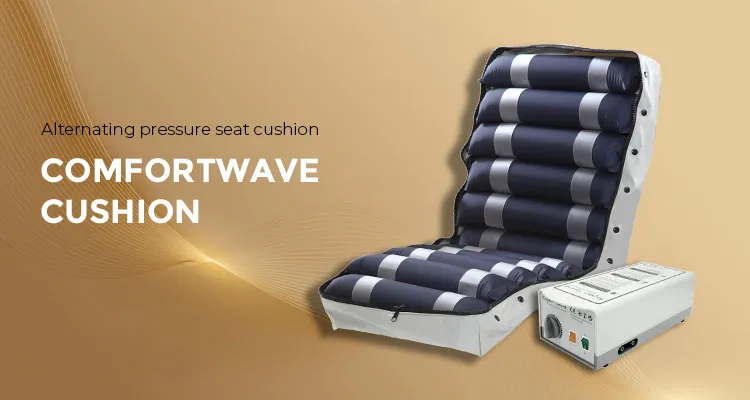
Senyang Wheelchair Air Cushion Example
Senyang provides air pads for facilities and families at a reasonable price, and helps for routine clinical practice without overpromising. Some of the selling points include:
- Medical-grade TPU multi-cell air system durable, puncture-proof and self-managing air flow, and responsive pressure relief and release.
- Even-immersion adjustable firmness for even-immersion so clinicians can easily adjust pressure for different body types and pelvic profiles.
- Moisture-wicking and wipeable for infection control which facilitates the user’s microclimate and cleaning efficiency and infection control between uses.
- Anti-slip base and coccyx contour relief provide reduced forward sliding and stable positioning.
-
Manufactured under ISO 13485 quality system, supporting consistent production and traceability.
Your facility provides a coccyx relief in lower air cell configurations for higher stability, or directs instability with higher relief configurations for deeper immersion in higher risk or less mobile clients, wider bariatric air cells can be provided. As always, these cushions work best when paired with sound positioning, routine checks, and a holistic prevention plan.
FAQs
Do air cushions completely prevent pressure sores?
No one product can complete the prevention. Air cushions accomplish risk reduction, outcome depends on posture, skin care, and scheduled position changes.
How firm should a cushion feel when inflated?
Firm as the user should not bottom out but soft enough to allow some immersion and envelopment. A practical check: seated users should feel some clearance above the seat base when pressing under the ischials.
How often should I check or adjust the air level?
Checking daily is best, and a more thorough check weekly. Check again after significant weight changes, when new posture needs arise, or when there are changes to comfort.
Can one cushion be shared between residents?
It can, but should be re-fit and cleaned between users. Adjust air levels, check fit, and ensure the cover is disinfected before each use.
What signs show the cushion needs replacement?
Constant air loss, cover cracking or thinning, any warping, and bottoming out repeatedly regardless of air levels indicate repair or replacement.
Conclusion
Selecting and maintaining a quality air cushion is one of the best methods to prevent pressure ulcers from developing over time in a wheelchair. It shifts pressure and maintains a microclimate in the skin—but is only effective when combined with active posture management, position changes at regular intervals, and skin inspections.
Contact Senyang to get in touch regarding detailed specifications or to request a sample evaluation unit for professional assistance.
