





Introduction: Why Patient Transfers Are a Critical Risk in Long-Term Care Facilities
En Estados Unidos, long-term care facilities (LTC) face one of the most common and highest-risk activities of daily care: patient transfers (e.g., bed-to-chair transfers, chair-to-standing, chair-to-chair transfers). Patients often require multiple transfers in a single workday, which creates ongoing safety and physical strain challenges for caregivers.
Some of the challenges of a LTC facility include:
-
Resident falls during transfers
-
Caregiver musculoskeletal injuries
-
Increased workers’ compensation claims
-
Staffing shortages exacerbated by injury-related absenteeism
As a result of the issues mentioned above, LTC facilities recognize sillones elevadores para traslado de pacientes more and more as necessary safe patient handling equipment as they try to meet the challenges of employee and operational costs, and efficiency.
This article outlines possibilities for compliance, safety and sustainable care and the selection of the most appropriate sillón elevador para traslado de pacientes in U.S. long-term care facilities.
What Is a Patient Transfer Lift Chair?
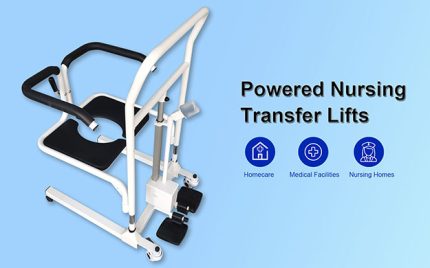
Sillas elevadoras de transferencia are highly specialized medical equipment designed to assist residents with a smooth transition from a premium seat to a standing position as well as transfer between seats in a sitting position.
Core Medical Functions
-
Electrically assisted sit-to-stand motion
-
Controlled forward tilt to promote safe weight shift
-
Stable armrests and foot support for balance
-
Designed for assisted—not independent—transfers
Medical-Grade vs. Consumer Lift Recliners
It is critical for LTC facilities to distinguish medical lift chairs from consumer recliner lift chairs:
| Característica | Medical-Grade Patient Transfer Lift Chair | Consumer Recliner Lift Chair |
|---|---|---|
| Primary purpose | Safe patient transfer | Comfort & relaxation |
| Structural stability | Alta | Moderado |
| Capacidad de carga | Institutional-grade | Limitado |
| Compliance suitability | Yes (LTC / healthcare use) | No |
| Caregiver assistance | Designed for assisted use | Not intended |
Using consumer-grade chairs in care facilities increases fall risk and compliance exposure.
Why Lift Chairs Are Critical in Long-Term Care Facilities
Resident Characteristics in LTC Settings
-
Edad avanzada
-
Limited mobility or muscle weakness
-
Cognitive impairment or dementia
-
Variable ability to follow transfer instructions
Operational Challenges
-
High frequency of daily transfers
-
Limited staff-to-resident ratios
-
Increased scrutiny from regulators and auditors
Core Benefits of Patient Transfer Lift Chairs
-
Reduced risk of resident falls
-
Lower physical strain on caregivers
-
Improved dignity and comfort during transfers
-
Consistent, repeatable transfer mechanics
For many facilities, lift chairs fill the gap between manual transfers and large mechanical lifts.

Common Patient Transfer Methods in LTC Settings
4.1 Manual Transfers
Manual lifting is one of the most dangerous practices and becomes more problematic as time goes on with regard to the principles of contemporary manejo seguro del paciente practices.
4.2 Gait Belts and Assistive Aids
These are appropriate for residents that are partially mobile; however, they are not appropriate for residents that are lacking strength or do not have the ability to balance.
4.3 Mechanical Lifts
These are extremely safe, however, they are often very time-consuming, and they are not space-efficient or practical for use in frequent transfers that are needed on a daily basis.
4.4 Patient Transfer Lift Chairs (Key Focus)
Purpose-built for use numerous times throughout the day and on a daily basis, they strike a good balance on the three competing variables of safety, efficiency, and the level of workload on the user.
Comparison Table: Patient Transfer Solutions in Long-Term Care
Table: Patient Transfer Solutions in LTC Facilities
| Transfer Method | Resident Safety | Caregiver Injury Risk | Time Efficiency | Suitable for Daily Use |
|---|---|---|---|---|
| Manual transfer | Bajo | Alta | Alta | No |
| Gait belt assist | Medio | Medio | Medio | Limitado |
| Elevador mecánico | Muy alta | Bajo | Bajo | Limitado |
| Patient transfer lift chair | Alta | Bajo | Alta | Sí |
This comparison clearly demonstrates why sillones elevadores para traslado de pacientes are increasingly favored in long-term care environments.
Key Factors to Consider When Choosing a Lift Chair
6.1 Resident Safety
-
Wide, stable base
-
Non-slip foot platform
-
Smooth, controlled lifting motion
6.2 Caregiver Ergonomics
-
Reduced bending and pulling
-
One-person operation capability
-
Proper transfer height alignment
6.3 Weight Capacity and Fit
-
Supports common LTC resident weight ranges
-
Seat dimensions appropriate for elderly populations
6.4 Ease of Use
-
Controles intuitivos
-
Minimal training time for new staff
-
Consistent operation across shifts
6.5 Durability for Institutional Use
-
Designed for high-cycle daily use
-
Reinforced frame and actuators
-
Suitable for long-term care environments

Safety and Compliance Considerations in the U.S.
OSHA
OSHAs advocates the prevention of caregiver injury from manual lifting and the musculoskeletal disorders associated with it.
CMS
CMS outlines the priorities of care outcomes and quality of care as well as resident safety and the prevention of falls.
Manipulación segura de pacientes (SPH)
A growing number of SPH programs compel facilities to use assistive and mechanical transfer devices as opposed to manual lifting.
A compliant sillón elevador para traslado de pacientes supports:
-
Injury reduction initiatives
-
Documentation during safety audits
-
Risk management strategies
Typical Use Scenarios in Long-Term Care Facilities
-
Bed-to-chair transfers in resident rooms
-
Sit-to-stand assistance for toileting
-
Therapy and rehabilitation sessions
-
Transfers to dining or activity areas
Lift chairs are especially valuable where transfers occur multiple times per day.
PREGUNTAS FRECUENTES
Q1: Are patient transfer lift chairs suitable for all residents?
They are best suited for residents with some weight bearing. Fully dependent residents may still require the use of mechanical lifts.
Q2: Do lift chairs replace mechanical lifts?
No, they are an addition to mechanical lifts and are used for the lower-acuity, frequent transfers.
Q3: How much training is required for staff?
Most medical lift chairs require little training and are quick to learn.
Q4: Are lift chairs covered under facility budgets or DME programs?
Generally, these fall under facility capital equipment budget lines and not separate DME reimbursements.
Q5: How do facilities evaluate ROI?
Lower injury claims, reductions in fall incidents, better staff retention, and improved effectiveness in patient transfers.
Conclusion: Safety and Efficiency Must Go Hand in Hand
In patient care transfer lifting chairs, safety of the residents and injury prevention of caregivers is one of the safety, compliance, and modern-day responsibilities in U.S. long-term care facilities.
It is about safety, useability, ruggedness, and the holistic needs of the institution, not consumer comfort, that define the correct lift chair for any facility.
Atención transfer lifting chairs for patients, for which the transfer of care is the mainstay of the chair, enhance the efficiency of care delivered as well as the maintained well-being of the caregivers and the quality of life of the patients.
