






What is an Air-Assisted Lateral Transfer Mattress?
An air-assisted lateral transfer mattress is a specialized patient transfer device designed to reduce friction and facilitate safe and effortless movement between surfaces, such as hospital beds, stretchers, or operating tables. This safe patient handling solution is particularly useful in minimizing physical strain on caregivers and improving patient comfort.
How It Works
The mattress is equipped with tiny perforations that release a controlled airflow when inflated, significantly reducing resistance between the patient and the surface below. This allows caregivers to slide the patient smoothly with minimal effort.
Who Can Benefit?
- Patients with limited mobility or complete immobility
- Post-surgical patients requiring gentle handling
- Elderly or disabled individuals in long-term care facilities
- ICU and emergency patients needing quick and safe repositioning
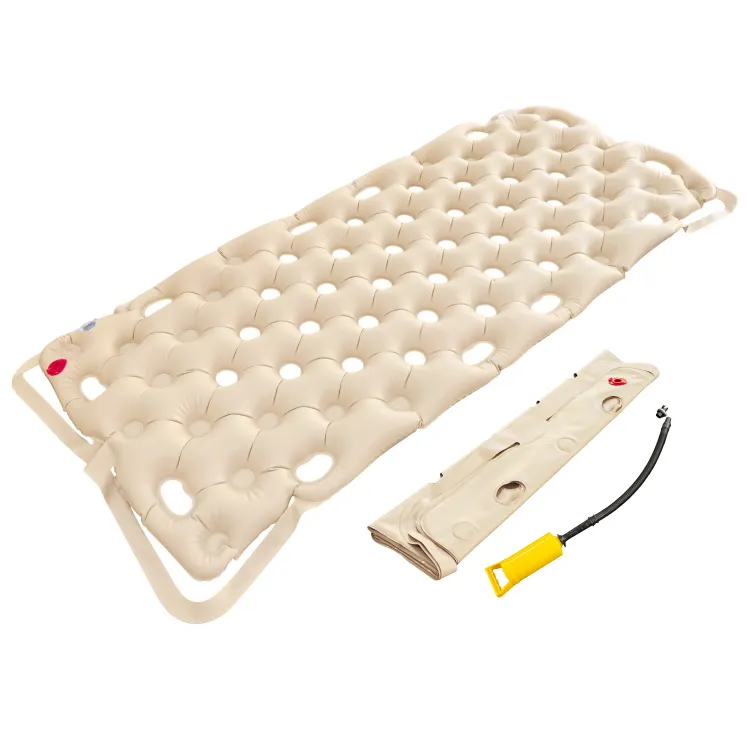
How to Properly Inflate an Air-Assisted Transfer Mattress Using a Manual Pump
Using a manual air-assisted lateral transfer mattress requires careful handling to ensure both patient safety and efficient operation. Below is a step-by-step guide for proper use.
Preparation Steps
- Lay the mattress flat beneath the patient, ensuring it is evenly positioned.
- Adjust the patient’s posture to keep them stable and comfortable.
- Attach the manual pump securely to the inflation valve, checking for leaks.
- Have at least two caregivers ready to assist with the transfer.
Inflation Process
- Pump air quickly into the mattress using firm, steady strokes.
- Ensure uniform inflation across the mattress surface—check for uneven or overinflated areas.
- Test mattress stability by gently shifting the patient to ensure proper support.
Lateral Transfer Process
- Position one caregiver at the patient’s head and another at the feet.
- Guide the movement in a slow, controlled manner, sliding the mattress toward the destination surface.
- Ensure patient stability, preventing sudden shifts or accidental rolling.
- Gently push the patient to the new surface while maintaining proper body alignment.
Completion Steps
- Slowly deflate the mattress by opening the air-release valve.
- Adjust the patient’s position for comfort and stability.
- Remove and fold the mattress for storage, ensuring cleanliness for future use.
Advantages of Using an Air-Assisted Transfer Mattress
✅ Reduces caregiver strain – Minimizes the risk of back injuries from lifting heavy patients.
✅ Enhances patient comfort – Prevents skin shear and excessive pressure during transfer.
✅ Improves efficiency – Allows for faster and smoother transfers.
✅ Manual inflation is power-free – Ideal for emergency situations and environments without electricity.

Comparison of Different Air-Assisted Transfer Mattresses
| Type | Best for | Advantages | Ideal Users |
|---|---|---|---|
| Manual Pump | No power supply areas, EMS | Lightweight, portable | Emergency responders, home care |
| Electric Pump | Hospitals, ICUs | Fast inflation, effortless | Long-term care, post-surgical |
| Heavy-Duty | ICU, bariatric patients | Supports higher weight capacity | Bariatric & critical care patients |
Safety Tips for Proper Use
⚠️ Ensure valve connection is secure before inflation to prevent air leakage.
⚠️ Always have at least two caregivers assist with the transfer.
⚠️ Do not overinflate—excess pressure can make handling difficult.
⚠️ Inspect equipment regularly for signs of wear and tear.
Frequently Asked Questions (FAQ)
🔹 Is manual inflation better than electric inflation?
Manual inflation is more portable and doesn’t require electricity, making it ideal for field use. However, electric pumps offer faster and effortless inflation in medical settings.
🔹 How many caregivers are needed for safe transfer?
At least two caregivers should be involved to ensure a smooth and safe transition.
🔹 How do I know if the mattress is properly inflated?
The mattress should be firm but not overly tight, with even air distribution and no sagging areas.
🔹 Can manual pump mattresses be used long-term?
Yes, but they require more effort compared to electric versions, so they are best suited for occasional or emergency use.
By following these steps, caregivers can safely and effectively use a manual air-assisted lateral transfer mattress to ensure safe patient handling and reduce the risk of injury.
