
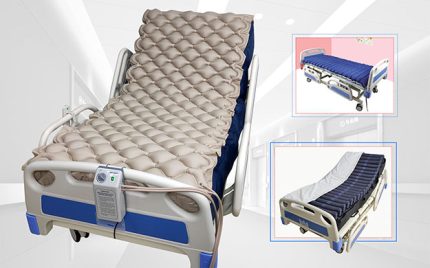







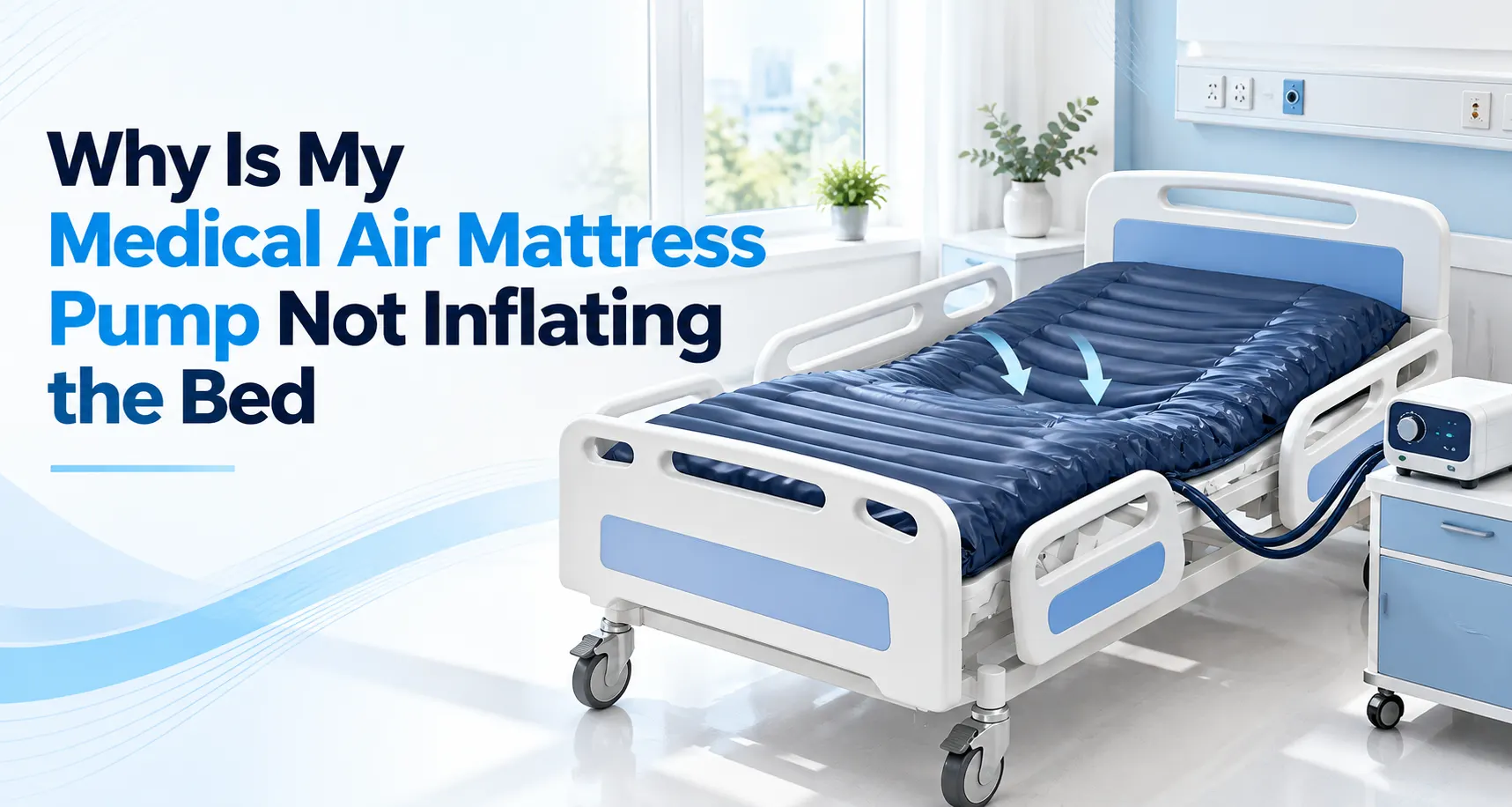
If a medical air mattress pump is running but the mattress does not inflate, the most common reasons include a blockage in the tubing; an incomplete connection; an open CPR valve; a leak in the air system; a clogged intake filter; or inadequate pump performance. Begin with the mattress and hose route and then proceed to fix each issue individually. Leave the interior inspection of the pump to the designated service center.
Before attempting to resolve a problem, ensure that the user has a proper surface to lie on and support to assist with the transfer or movement of the user from one position to another as specified in the care plan. If possible, try to inspect the user’s empty mattress before beginning the startup process for the specific mattress and pump used, since each product will have different inflation times, CPR control options, connector locations, alarm functions, and testing procedures.
Identifique o padrão de inflação antes de alterar qualquer coisa
A expressão «não enchem» pode referir-se a várias avarias diferentes. Observar o padrão permite restringir a pesquisa e evita ajustes desnecessários.
| O que se observa | Área mais provável a verificar | Primeira ação |
|---|---|---|
| O colchão mantém-se totalmente plano | Mangueira principal, conector, válvula de RCP, saída da bomba | Verifique todo o percurso do ar, desde a bomba até ao colchão |
| O colchão enche muito lentamente | Tubo torcido, válvula CPR parcialmente aberta, filtro sujo, pequena fuga | Comparar com o tempo de inflação inicial do modelo |
| Uma célula ou uma zona permanece plana | Mangueira da célula, ligação ao coletor, célula danificada | Inspecione a secção afetada e a respetiva ligação |
| O colchão enche-se de ar e, em seguida, amolece | Fuga, conector solto, vedação CPR, mudança de modo | Preste atenção e verifique se há perda de pressão após o enchimento |
| As células alternadas amolecem e voltam a encher-se | O ciclo alternado normal pode estar ativo | Observe um ciclo completo antes de diagnosticar uma avaria |
| A bomba funciona com um alarme de baixa pressão | O sistema não consegue atingir nem manter a pressão pretendida | Leia o indicador e, em seguida, siga as verificações abaixo por ordem |
Não se deve partir do princípio de que todas as células flexíveis estão com defeito. No modo alternado, um grupo de células pode reduzir a pressão enquanto outro grupo sustenta a superfície. É mais provável que exista uma avaria quando os grupos esperados não voltam a encher, o colchão nunca atinge o seu estado de prontidão ou uma indicação de baixa pressão persiste para além do período normal de arranque do modelo.
Siga o percurso do ar em sete passos
Passo 1: Confirmar o arranque, o modo e o tempo de enchimento
Confirm the pump is linked with the compatible mattress, turned on and is functioning in the selected operation mode. Many systems include controls for transport, standby, mute, seat-inflate, static or maximum-inflate which alter the function of the pump. A motor noise by itself cannot confirm that air is being delivered to the appropriate outlet.
- Verifique os números de modelo da bomba e do colchão, bem como a compatibilidade dos conectores.
- Certifique-se de que nenhuma função de pausa, modo de espera ou transporte está ativa.
- Observe os indicadores de pressão, modo e alarme, em vez de se basear no som.
- Respeite o período completo de enchimento inicial indicado para o modelo.
- Se o sistema tiver um indicador de «pronto», aguarde até que esse estado seja atingido antes de avaliar o apoio.
The time required to inflate a large replacement mattress is typically longer than that of a small mattress overlay. Additionally, bed movement (articulation) and additional weight can affect the rate at which the mattress system becomes operational. Therefore, the first step in diagnosing potential problems with the mattress system should be done with the bed in a flat position and without any additional weight, provided that the product manual permits such testing.
Passo 2: Siga os tubos de ar desde a bomba até ao colchão
Check each tube using your hands and eyes to verify it is clear of obstructions from the point of connection to the pump to the point where the tube enters the mattress. Be sure to check around the headboard, on the side of the bed frame, under the fixing straps, and around any articulating areas of the bed. Tubes can look like they are attached when in reality they are compressed by the bed platform or sharply bent at the foot end of the bed.
Restrições relativas aos tubos a ter em conta
- Uma curva acentuada imediatamente a seguir ao conector da bomba.
- O colchão ficou torcido enquanto era desembalado ou virado.
- Tubagem encravada por baixo do colchão, da estrutura da cama, da grade lateral ou do atuador.
- Uma cinta de fixação enrolada à volta da mangueira de ar.
- Uma fissura, uma secção achatada, uma abrasão ou um encaixe terminal danificado.
- Folga insuficiente quando se altera a altura do encosto ou da cama.
To straight-line the route with no tension on the hose, then either restart or reset the system as instructed in the manual and determine if the mattress is beginning to fill. After inflation, cycle the bed through all of its regular positions to ensure that the restriction will not come back.
Passo 3: Voltar a encaixar todos os conectores das mangueiras
A connector may appear to be correctly aligned with the other part; however, it has not yet reached its locked state. Follow the manufacturers’ instructions regarding switching off or pausing the system. Release the connector, check that there is an intact seal and fit. Align the keyed or color-coded parts. Re-connect the connector until the latch is completely engaged.
- Verifique se há plástico rachado, acessórios tortos, sujidade ou se falta alguma junta.
- Certifique-se de que as várias portas estão ligadas na ordem correta dos canais.
- Verifique se não há nenhuma tampa de proteção ou tampa de transporte a bloquear uma porta ativa.
- Utilize um teste de tração suave apenas se o design do conector o permitir.
- Preste atenção a eventuais fugas de ar persistentes à volta da junta após o reinício.
Do not attempt to attach a connector from a different pump or mattress. Although the shape may appear to be the same as the correct connector, this does not mean that the internal channel layouts, seal depths, pressure controls, and flow capacities are compatible.
Passo 4: Fechar e fixar a válvula de RCP
When activated, the CPR release is designed to allow the mattress to quickly deflate. If it remains partially closed, open, or incorrectly positioned after being cleaned, transported, or tested; the pump will continue running without creating pressure.
- Localize todos os comandos CPR identificados para o modelo de colchão.
- Verifique a etiqueta ou o esquema para saber qual é a posição normal de funcionamento.
- Feche, insira, rode ou encaixe o comando exatamente conforme indicado.
- Inspecione a vedação e o fecho circundantes para verificar se apresentam danos visíveis ou material retido.
- Repita o teste de enchimento e verifique se a válvula permanece acionada.
Dica prática: After you have cleaned or moved the mattress, make sure to include the CPR closure in your pre-use checks. This is because a valve could still remain open despite the other components being in place.
Passo 5: Verifique se há fugas numa célula, numa mangueira ou num coletor
If you have verified that the principal connection and CPR valve are working properly, examine the mattress itself. Air will leak from a cell that has been pierced, a split inside tube, a loose cell connection, a broken manifold or a leaking CPR seal just as rapidly as the pump is delivering air.
Como o padrão de fuga ajuda
- Uma célula plana aponta para essa célula ou para a sua ligação ramificada.
- Um grupo alternado plano pode indicar um problema no canal ou na conduta.
- Um colchão que se enche e depois amolece gradualmente indica uma perda contínua de ar.
- Um silvo nítido perto de uma junta ajuda a localizar a área a inspecionar.
- Uma bomba que funciona continuamente pode estar a compensar uma fuga noutro ponto do sistema.
Do not remove the cover until the operator’s instructions allow you to. Do not pull on the cell tubing. Use a leak-testing or servicing procedure that is approved by the manufacturer. Adhesives, sealants, heating, sharp instruments and non-approved patches used in homes can damage the material and/or make future repairs more difficult.
Replace a damaged cell or hose only with a compatible replacement and connect it to the proper channel location. If you find that the leak is within a sealed manifold, or if you cannot determine the location of the fault until the system has been disassembled, then label the mattress and send it in for service.
Passo 6: Inspecionar o filtro de admissão da bomba
Many medical air mattress pumps pull in outside air through an easily accessible filter. Outside air may contain many types of particles such as dust, lint, hair, and bedding fibers. These types of particles can block the intake of air, which will cause the initial inflation of the mattress to take longer than normal, or prevent the system from being able to regain lost pressure due to leaks or positional changes.
- Coloque a bomba na posição de segurança indicada para o acesso ao filtro.
- Localize o filtro que pode ser substituído pelo utilizador e anote a sua orientação.
- Verifique se há poeira visível, acumulação de fibras, humidade, deformações ou deterioração.
- Limpe-o ou substitua-o apenas de acordo com o método e a periodicidade especificados para esse modelo.
- Volte a colocar a tampa corretamente antes de ligar novamente a bomba.
Não utilize a bomba sem o filtro especificado nem substitua este por espuma doméstica mais densa. Um filtro incorreto pode permitir a entrada de impurezas na bomba ou restringir ainda mais o fluxo de ar.
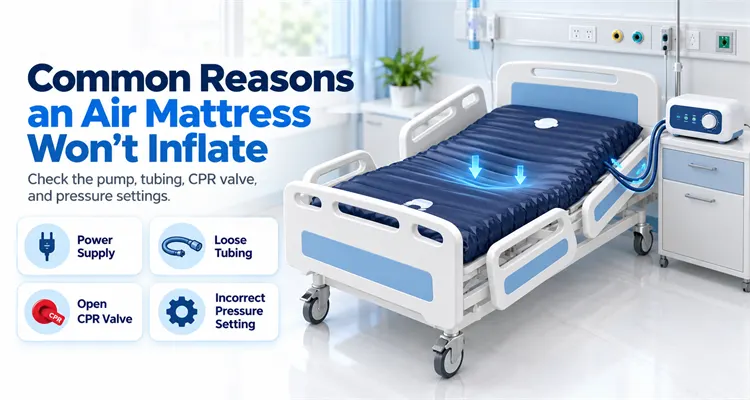
Passo 7: Decidir se a saída da bomba necessita de testes de manutenção
After checking the hose route, connector, CPR valve, cell, and filter, if the mattress does not inflate fully it may indicate that there is not enough pump output, a valve that does not allow air flow, a sensor issue, or an internal control malfunction. Even with a motor running, it could be producing very little usable airflow.
Use only the model’s approved output test, diagnostic mode, test adapter, or service procedure. You may use a known good mattress or pump that is compatible with your model to determine which part of the system is failing, provided the manufacturer or service process allows you to compare the two systems. Do not attempt to open up the unit’s housing, bypass any alarm features, block outlet ports with your hands, or change the settings of any internal valve in order to test the unit.
Ao analisar a substituição bombas para colchões de ar médicos, deve corresponder ao conector do colchão, ao número de canais de ar, aos requisitos de fluxo de ar, à gama de pressão, aos modos de funcionamento, à lógica de alarme, às especificações de alimentação e ao sistema a que se destina. A ligação física, por si só, não é suficiente.
Leve a bomba ao serviço técnico quando
- Depois de eliminadas todas as restrições externas, o fluxo de ar é reduzido ou nulo.
- A bomba apresenta repetidamente uma avaria, apesar de o colchão estar corretamente ligado e não apresentar fugas.
- A caixa, o cabo, a ficha, o conector, o painel de controlo ou os ganchos da bomba estão danificados.
- O aparelho emite calor, odores, ruídos de atrito ou ruídos mecânicos anormais.
- Uma configuração compatível e comprovadamente funcional funciona com outra bomba, mas não com esta unidade.
- A avaria volta a ocorrer após um reinício temporário ou depois de o sistema atingir a pressão.
Verifique novamente o sistema após a correção da causa
Não interrompa o teste assim que a primeira célula se elevar. Deixe o colchão concluir o seu enchimento inicial e, pelo menos, um ciclo de funcionamento ou período de colocação em serviço indicado para o modelo. Verifique a superfície da cabeça aos pés, confirme se todos os grupos de células esperados mudam corretamente e certifique-se de que a indicação de baixa pressão desaparece.
- Volte a colocar a roupa de cama sem cobrir a bomba nem apertar o colchão.
- Verifique o perfil da plataforma e certifique-se de que as mangueiras permanecem abertas em todas as posições previstas.
- Verifique o modo pretendido e a configuração da pressão após qualquer reinicialização.
- Registe a avaria observada, o elemento corrigido, a peça de substituição e o resultado final do teste.
- Se a causa continuar por determinar, mantenha o sistema fora de serviço até que seja verificado.
Perguntas mais frequentes
Por que razão a bomba está a funcionar continuamente?
While normal in some cases (e.g. after first inflating), continuous running can also indicate that the system is replacing air lost due to a leak, an open CPR valve, a loose connector, or a damaged cell. You should compare the system’s behavior with the normal cycle outlined in the instructions for your model.
Um filtro sujo pode impedir que o colchão se encha?
If a filter is severely restricted, it will significantly lower the rate of air entering the system and cause the process of inflating to be extremely slow. Only inspect and service the user serviceable filter using the techniques that are provided in the manual for the pump.
Por que razão apenas metade do colchão está insuflado?
Cells are divided into groups by alternating systems, with one group being softer during some parts of the cycle. When the same group does not refill, examine its associated channel, connector, manifold, and cells.
A válvula de RCP deve estar aberta durante a utilização normal?
Não. O comando do CPR permanece normalmente fechado e bloqueado durante o enchimento e o funcionamento normal. O método exato de fecho depende do design do colchão.
É possível utilizar qualquer bomba com o colchão?
Não. A bomba deve ser compatível com a estrutura do colchão, os conectores, os canais, os requisitos de pressão e fluxo de ar, os modos, os alarmes e as especificações de alimentação. Utilize a combinação aprovada para o sistema específico.
Conclusão
If your medical air mattress pump is working, however the mattress remains empty, go through the air line in order: verify that the pump has turned on and is set to the correct mode, make sure all the lines are straight, re-attach all connectors, shut off the CPR valve, look at each cell and each hose inside the mattress, check the filter, and determine if the pump output needs to be tested for service.
The way in which your symptoms appear can indicate what area to check. If the entire mattress is completely flat then it will likely indicate the main air line. However if there is only a portion of the mattress that is flat then it would probably be a cell or channel. If the mattress takes longer than normal to inflate then there may be a restriction or small leak in the system. Lastly, if the pressure does not remain constant then it may mean that the system continues to lose air or is producing insufficient air flow. Only fix one problem at a time and do a complete check of the system’s function prior to using the system again.