
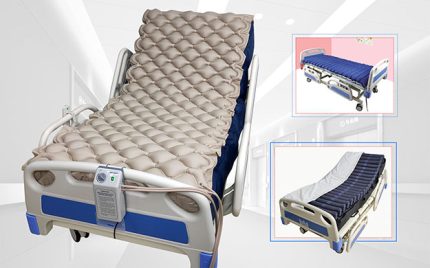









In hospital settings, bed mattresses are of great importance in helping patients with comfort, support, and pressure management. Patients’ recovery, ease of care, and overall well-being are directly related to the right choice of thickness of a hospital bed mattress. This review addresses the different types of mattresses, standard thickness range, and the effect of thickness on comfort and care.
Standard Thickness Range of Hospital Bed Mattresses
Standard Thickness Range of Hospital Bed Mattresses. The materials used and the design of the mattresses, as well as their purpose, all contribute to the varying extent of thickness in hospital bed mattresses. The most common thicknesses include:
- 4 to 5 inches – Typically found in basic foam or alternating pressure mattresses used for short-term care.
- 6 to 8 inches – Standard for memory foam, innerspring, and hybrid hospital mattresses, balancing comfort and support.
- 9 inches and above – Found in premium hospital mattresses with multiple layers of foam, spring, or hybrid designs, offering enhanced comfort for long term patients or those with special needs.

Thickness Comparison of Different Hospital Bed Mattress Types
| Mattress Type | Typical Thickness | Key Features | Best For |
|---|---|---|---|
| Foam Mattress | 4-8 inches | Lightweight, pressure relief, memory foam options available | General hospital use, post-surgery recovery |
| Innerspring Mattress | 6-10 inches | Firm support, good airflow, traditional mattress feel | Patients who prefer a firmer bed |
| Alternating Pressure Mattress | 4-6 inches | Dynamic air support, pressure ulcer prevention, powered by a pump | Bedridden patients, pressure ulcer prevention |
| Hybrid Mattress | 6-10 inches | Combination of foam & innerspring, balanced support | Long-term care, bariatric patients |
How Mattress Thickness Affects Comfort and Care
This part explains how thickness selection affects comfort, support, and maintenance care.
➡️ Thinner Mattresses (4-5 inches)
✅ Movement of patients is easier for care givers.
✅ Great for short term hospital beds or alternating pressure systems.
❌ Does not provide enough pressure relief for long bedridden patients.
➡️ Medium Thickness Mattresses (6-8 inches)
✅ Average thickness for hospital mattresses. Offers support while also being comfortable.
✅ Passed sufficiently well on comfort and post-surgery recovery patient care.
✅ Standard hospital mattress made of foam, memory foam or hybrid designs.
➡️ Thicker Mattresses (9 inches and above)
✅ Maximal level of comfort and pressure relief, often employed in the care of patients with weight issues.
✅ Best suited for nursing homes where cushioning support is necessary for patients.
❌ Possibly too large for use in standard hospital beds and may make it more difficult for caregivers to reposition patients.

How to Choose the Right Hospital Mattress Thickness?
The optimal thickness of the mattress depends on the different needs, mobility, and risk factors for the patient:
- For short-term hospital stays → A mattress that is 4-5 inches thick, made of foam or alternating pressure, should be enough.
- For long-term bedridden patients → A memory foam or alternating pressure mattress that is 8 inches thick will be more comfortable.
- For bariatric or high-weight patients → A hybrid or innerspring mattress that is at least 9 inches thick will provide the necessary support.
- For post-surgical patients → Having a hybrid or memory-foam mattress of medium thickness (that is 6 to 8 inches thick) will support better recovery.
Summary Table: Hospital Bed Mattress Thickness & Recommendations
| Mattress Type | Thickness Range | Advantages | Best For |
|---|---|---|---|
| Foam Mattress | 4-8 inches | Lightweight, pressure relief, affordable | General hospital patients, post-surgery recovery |
| Innerspring Mattress | 6-10 inches | Firm support, durable | Patients who prefer a traditional bed feel |
| Alternating Pressure Mattress | 4-6 inches | Prevents bedsores, improves circulation | Bedridden patients, pressure ulcer prevention |
| Hybrid Mattress | 6-10 inches | Combines foam & springs for support & comfort | Long-term care, bariatric patients |
Final Thoughts
The better the quality of the mattress the deeper the comfort and the better the restowing of the body, thus improving the care and medical outcome for the patient. While thin mattresses are practical for short term use in the hospital, medium and thicker mattresses are more supportive for the long-term patient. The optimal thickness of a mattress for the hospital setting depends on the individual case of the patient in question, as well as the level of comfort he or she wishes to achieve.
An optimal level of support necessaries treatment outside of the hospital has to be provided for the patient while in the hospital tailor made for their certain condition. The effect of maximal comfort requires an understanding and discern of the problem of the patient and level of care that can be provided.