





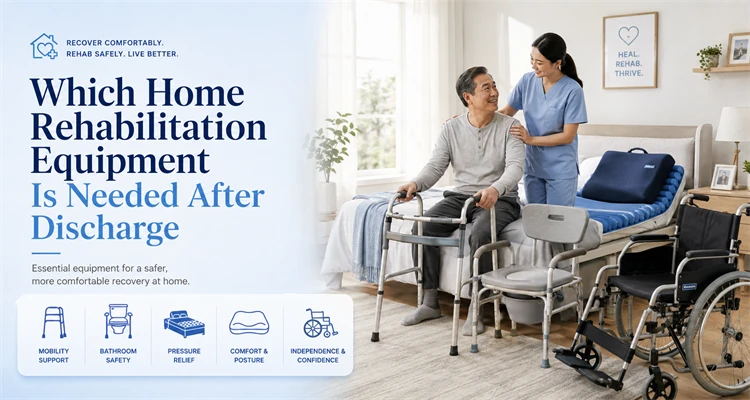
Moving to home from hospital is not just a matter of transport and leaving one mobility aid by the door. It is about preparing the home to meet the needs of daily activities such as resting, changing position, sitting out, transferring, toileting, washing, walking and the provision of rehabilitation.
The required combination of equipment is dictated by the current ability, expected recovery, the skin condition, the body size, the care giver support, the layout of the home and the discharge plan instruction. Equipment should be made available before they are needed and everyone involved should know how to adjust it, clean it and keep a check on it.
1. Start Equipment Planning Before Discharge
Limits of personal mobility demonstrated in an open therapy area in the hospital may not be evident in a restricted bedroom, the height of the chair(s) in thebcome, the size and height of the bathroom, or thresholds.
Information To Confirm
- Bed mobility, sitting balance, standing ability, and walking distance.
- Weight-bearing or movement restrictions and the rehabilitation goals.
- How many people are required for each transfer.
- Current skin concerns, continence needs, and time spent in bed or sitting.
- Height, weight, body dimensions, and equipment working-load requirements.
- Room measurements, furniture heights, stairs, floor surfaces, and bathroom access.
- Who will deliver, assemble, demonstrate, service, and collect loan equipment.
2. Equipment For Bed-Based Care
For extended bed use, an adjustable bed is necessary. The backrest and knee angle should be adjustable to allow the user to be in a variety of positions for rest and to eat. An adjustable bed helps caregivers.
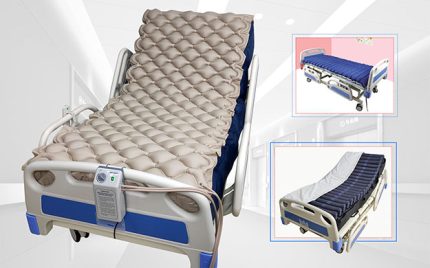
When selecting a mattress, one must consider the mobility of the user, skin integrity, comfort, weight of the user, how many hours they will be on the bed, and the type of bed frame. People who need to reposition themselves may benefit from mattresses made of foam. However, dynamic support mattresses are more appropriate for users who need to have pressure changes due to significant medical needs or for close pressure-care management situations.
When considering medical air mattress systems, confirm mattress dimensions, pump controls, alarm visibility, power access, backup arrangements, cover cleaning, and compatibility with the bed platform and side rails.
Useful Bedside Items
- Bed lever or approved support rail where appropriate for the bed and user.
- Slide sheets or repositioning aids selected for the handling plan.
- Overbed table for meals, medication, and daily activities.
- Pressure-redistributing mattress or overlay matched to assessed needs.
- Washable protector and fitted sheets that do not restrict mattress operation.
- Call device, light, water, and essential items within safe reach.
3. Seated Support Beyond The Bed
The support offered by bed-to-chair transfer systems is highly individual and should reflect how long the user is expected to sit on the chair or support surface. Seat height affects transfer and stand-up assistance, while armrests, foot, back, and lateral support affect stability and posture.
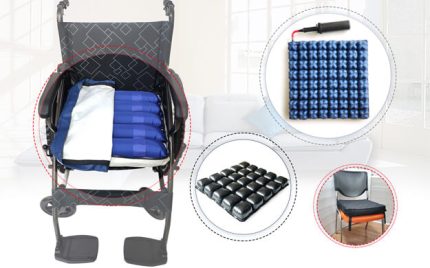
A wheelchair cushion may use foam, gel, air, or a combination. The choice should account for sitting tolerance, pressure distribution, heat and moisture, transfer technique, cushion height, stability, and the user’s ability to check or adjust it.
- Confirm the cushion fits the wheelchair base without curling or sliding.
- Check whether added cushion height changes footrest or armrest position.
- Use a removable cover that can be cleaned within the home routine.
- Reassess sitting time and support as activity and strength change.
4. Transfer Equipment For Bed, Chair, Toilet, And Shower
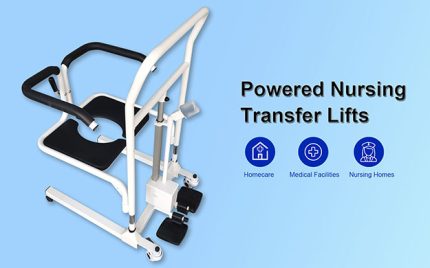
Transfer equipment should match the person’s actual movement pattern. A transfer board may help with a seated lateral transfer when the person can participate. A standing aid may suit someone who can bear weight through the legs. A transfer chair supports selected seated transfers, while a mobile lift with a sling is used when fuller body support is required.
For repeated seated movement between bed, wheelchair, toilet, or shower surfaces, patient transfer chairs may reduce direct lifting when the person, room, furniture clearance, and operating instructions are compatible.
Transfer Route Checks
- Starting and destination surface heights.
- Under-bed and under-chair clearance for equipment legs.
- Door width, turning radius, thresholds, rugs, and floor slopes.
- Brake access and space for the required number of caregivers.
- Toilet approach, shower suitability, and wet-area cleaning requirements.
- Storage position that does not block emergency or daily access routes.

5. Mobility Aids For Gradual Activity Recovery
The walking aid you choose should be based on the mobility assessment, not personal preference. A walking frame provides a lot of support; a rollator (or walking frame with wheels) provides support and also has brakes and sometimes a seat. Crutches and a walking stick target support, but as they have less support, require more of the user’s balance and coordination.
Consider the height of the handles, grip type, brake placement and reach, frame width and especially the overall width, the size of the wheels and the foot cover (and whether you can remove it), and your ability to cross thresholds. The equipment you were evaluated and educated on how to use in the hospital should also be reassessed in your home, especially where hallways are narrow or where there are changes in the floor surface.
6. Equipment For Limb Recovery And Circulation Routines
Home rehabilitation may include therapist-directed exercises to restore strength and range of motion, balance, and circulation. Positioning supports and other simple items to strengthen and exercise both the hand and foot may be useful. These items should align with the rehabilitation program and the patients’ capability of using them correctly.
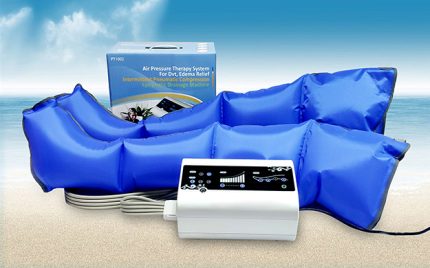
Air compression therapy devices may be ordered for some care plans. The responsible clinical team should verify the type of device, pressure range, timing of treatment, removal of the device for cleaning, and the resting part of the device for placement on the affected limb. These devices should not replace walking exercises and other therapeutic modalities prescribed in the discharge plan.
7. Build A Complete Home Rehabilitation Equipment Bundle
| Daily Need | Possible Equipment | Home Fit Check |
|---|---|---|
| Resting and bed care | Adjustable bed, suitable mattress, overbed table | Bed space, power, height, side access |
| Position changes | Slide sheet, repositioning aid, support wedges | Technique, storage, caregiver training |
| Sitting support | Appropriate chair, wheelchair, pressure cushion | Seat size, posture, foot support, sitting time |
| Bed-to-chair transfer | Board, standing aid, transfer chair, or lift | Participation, clearance, brakes, operator number |
| Toileting and washing | Commode, raised seat, shower chair, grab support | Bathroom width, wet-area suitability, cleaning |
| Indoor mobility | Frame, rollator, crutches, or cane | Handle height, doorways, flooring, thresholds |
| Exercise and limb recovery | Bands, pedal exerciser, positioning or compression system | Programme, fit, instructions, follow-up |
Not every person needs every item. The purpose of a bundle is to make the equipment work together. A higher cushion may change transfer height; a wider bed may reduce space for a lift; and a bathroom aid may be unusable if the transfer chair cannot pass the doorway.
8. Training, Cleaning, And Follow-Up
The patient and the caregivers should practice hands-on the tasks they will perform each day prior to the first unsupervised day. Each family should have a training session on adjustment and locking, what to look for when there are concerns with the equipment, how to safely clean the equipment, and emergency controls.
- Keep model-specific instructions with the equipment.
- Label charging points, removable parts, and personal settings.
- Record service contacts and the process for urgent replacement.
- Arrange follow-up when mobility, weight-bearing, skin condition, or caregiver support changes.
- Return or replace equipment that no longer matches the rehabilitation stage.
Conclusion
The goal of home rehabilitation technology is to provide a seamless path from bed to sitting, to transfers, to mobility and limb recovery as needed. The best combination of home technologies is based on the person’s current function and the expected progress with available assistive technology and home help.
Plan the equipment before discharge and test it over all household paths. Ensure that each user knows how to set it up and perform daily checks. Review the combination of technologies as the rehabilitation progresses to make sure equipment is supportive without being unnecessarily crowded.
FAQ
Which Equipment Should Be Ready Before Hospital Discharge
Any item required for the first transfer, toileting, sleeping, pressure care, or safe movement should be delivered, fitted, and demonstrated before it is needed at home.
Whether A Hospital Bed Is Always Required At Home
No. The decision depends on bed mobility, transfer height, positioning, caregiver access, and available room. Some people can use their existing bed with selected accessories.
How To Choose Between A Transfer Chair And A Mobile Lift
A transfer chair supports selected seated transfers, while a mobile lift and sling provide more complete body support. The person’s participation, posture, weight-bearing ability, space, and handling plan guide the choice.
When Home Equipment Should Be Reviewed
Review equipment when mobility, sitting tolerance, skin condition, body weight, caregiver availability, or rehabilitation goals change, and after any repeated difficulty using it.
How To Avoid Buying Too Much Equipment
Start with essential daily tasks and expected short-term progress. Use hire or loan arrangements where available, and add or replace equipment after follow-up assessment rather than purchasing every possible item at once.